
District steam and campus utilities
Campus steam vaults, boiler rooms and distribution mains.
Restore insulation on exposed valves and fittings while retaining routine inspection and shutdown access.
See equipment and materials →Explore the equipment locations, maintenance problems and material decisions for each industry.
Campus steam vaults, boiler rooms and distribution mains.
Restore insulation on exposed valves and fittings while retaining routine inspection and shutdown access.
See equipment and materials →Boiler plants and utility steam serving sterilizers and water heaters.
Prepare a phased item list around maintenance windows and retain access to drains, controls and equipment tags.
See equipment and materials →Utility steam near pasteurizers, kettles and washdown zones.
Specify serviceable insulation that can be reviewed against cleaning chemicals, hygiene zoning and fibre-containment requirements.
See equipment and materials →Chiller rooms, chilled-water valve stations and hot-water loops.
Control condensation at chilled fittings while preserving valve access and continuity with adjacent pipe insulation.
See equipment and materials →Extruder barrel zones, heads and accessible process heaters.
Review removable insulation around the heated zones while preserving sensor, electrical and cooling access.
See equipment and materials →Heat exchanger heads, process control valves and utility pipework.
Plan around inspection points, leak detection, turnaround access and the ability to remove each cover section.
See equipment and materials →Steam headers, pressure stations, access doors and pipe bends.
Lay out separate covers around hot equipment with scheduled access and documented operating limits.
See equipment and materials →Repeat covers for custom machinery and irregular equipment housings.
Start with one revision-controlled fit check, then define reproducible seams, openings, labels and packing.
See equipment and materials →Mark adjacent insulation, platforms, pipe supports and the path needed to remove the jacket. A photo of the working side helps us compare seams and closure positions before drawing review.
Prepare photos and dimensions →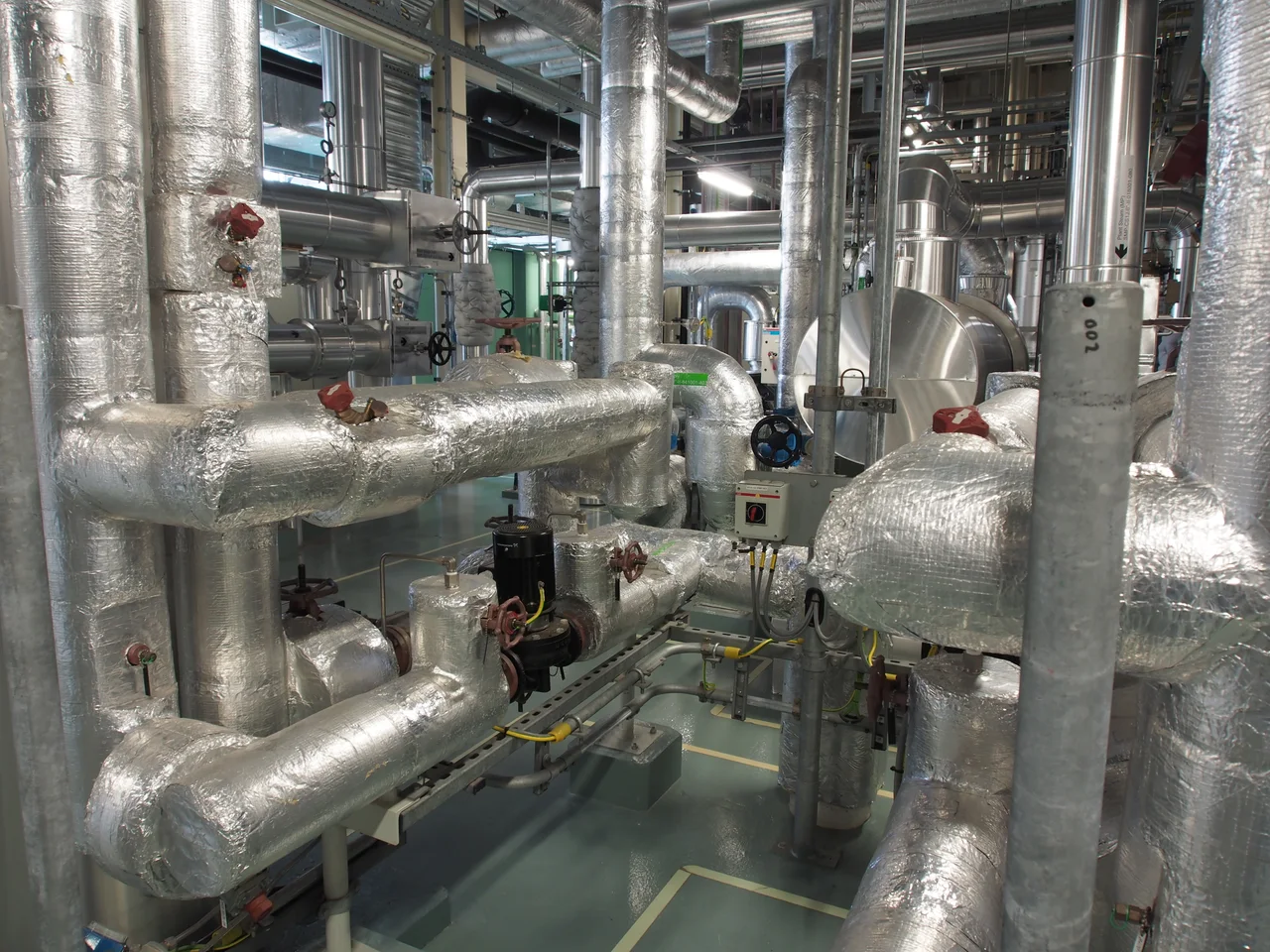
Compare project notes for tight clearance, washdown and condensation, or send your own equipment details.
