
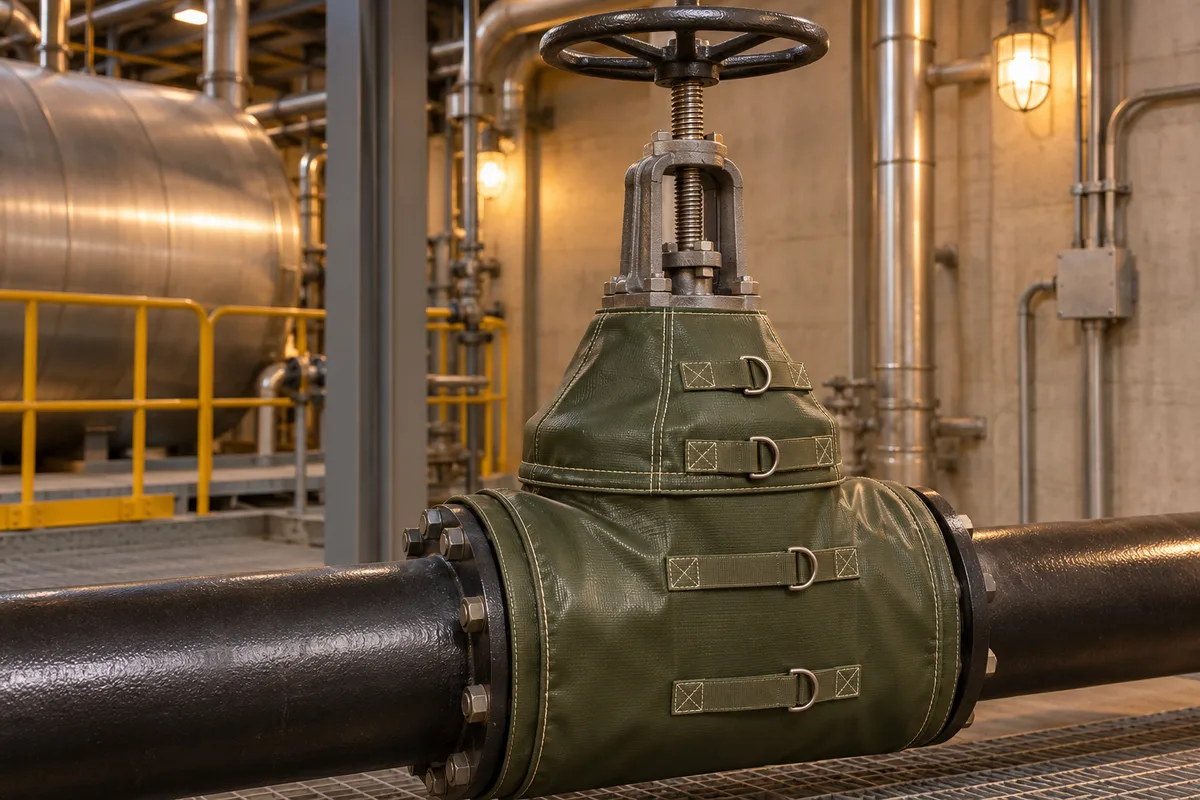
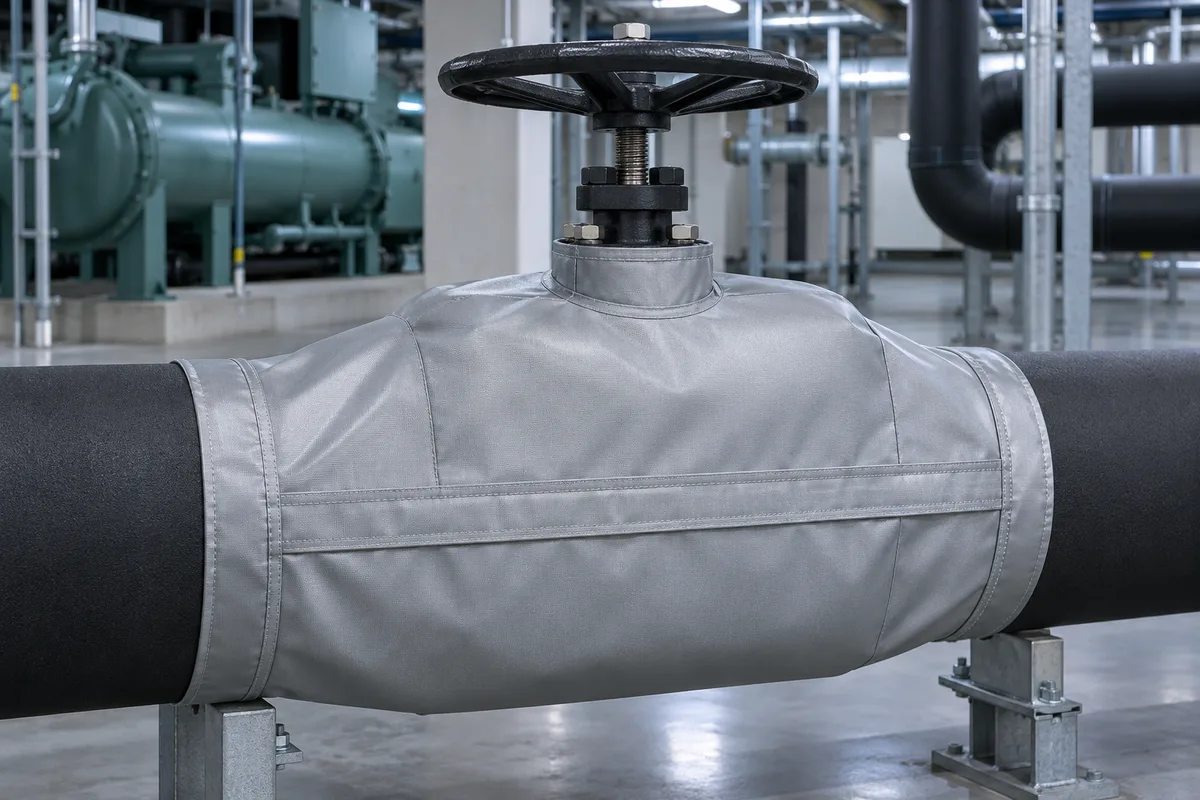
Removable gate valve insulation jackets
Cover the valve body and keep the rising stem and handwheel free to travel.
Split body and optional separate bonnet section
Specifications and thermal reference →Compare shapes, material layers, nominal thickness options and thermal references. Open a design to see what it solves and what to measure.
Valves, flanges and fittings in hot utility lines.
Cover the valve body and keep the rising stem and handwheel free to travel.
Split body and optional separate bonnet section
Specifications and thermal reference →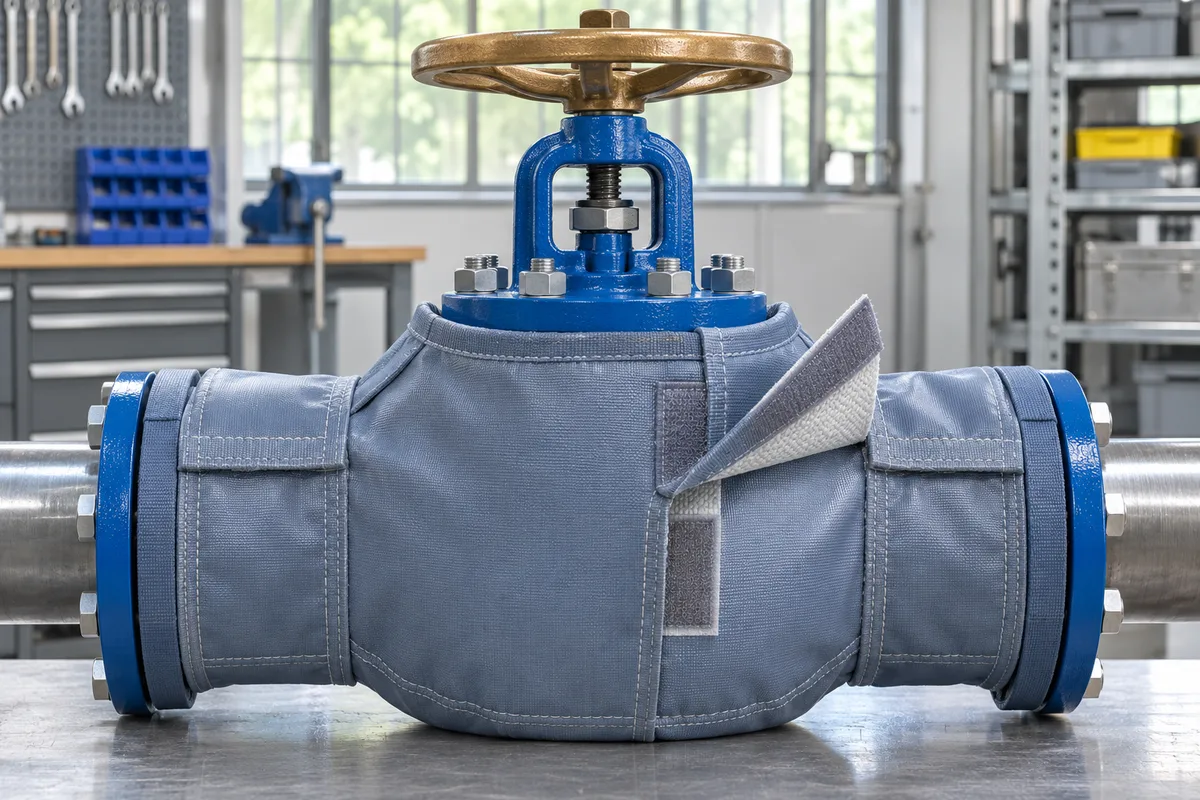
Fit the curved body without crowding the bonnet or packing gland.
Contoured body panels with a formed bonnet opening
Specifications and thermal reference →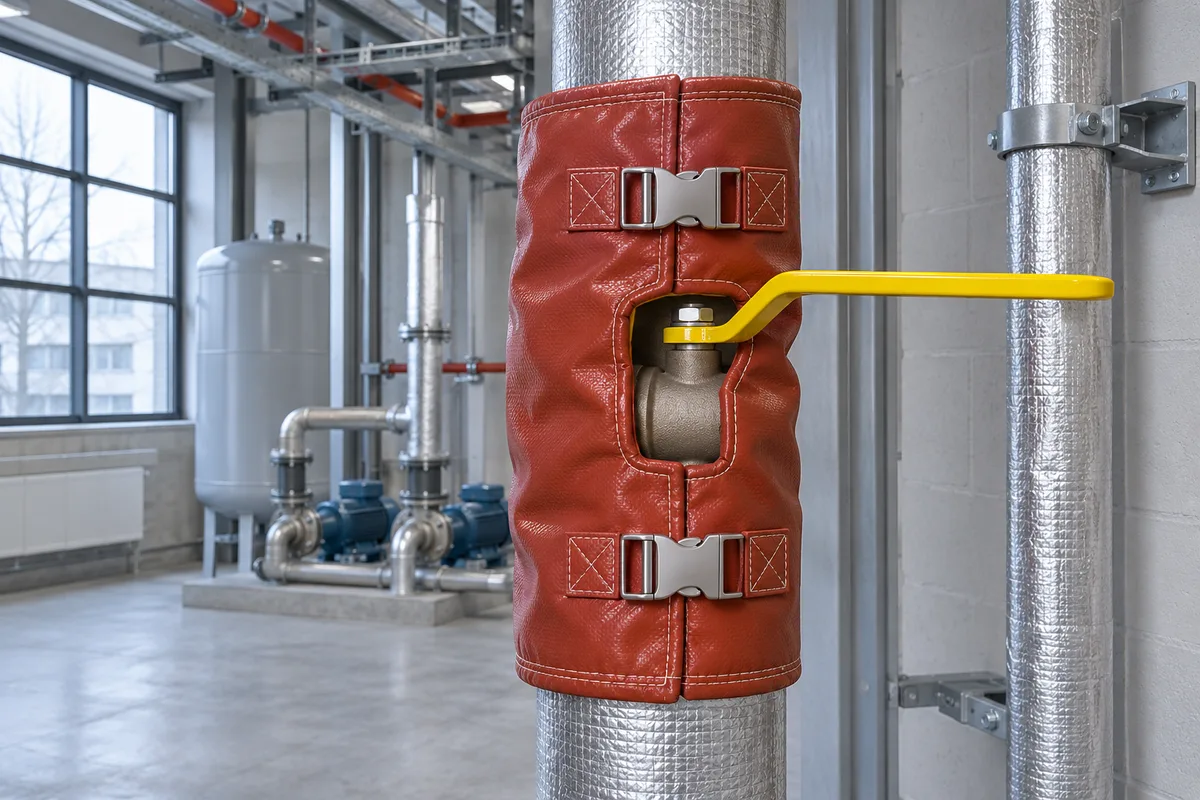
Leave room to operate the full lever sweep and read the valve position.
Low-profile split jacket with a quarter-turn lever cutout
Specifications and thermal reference →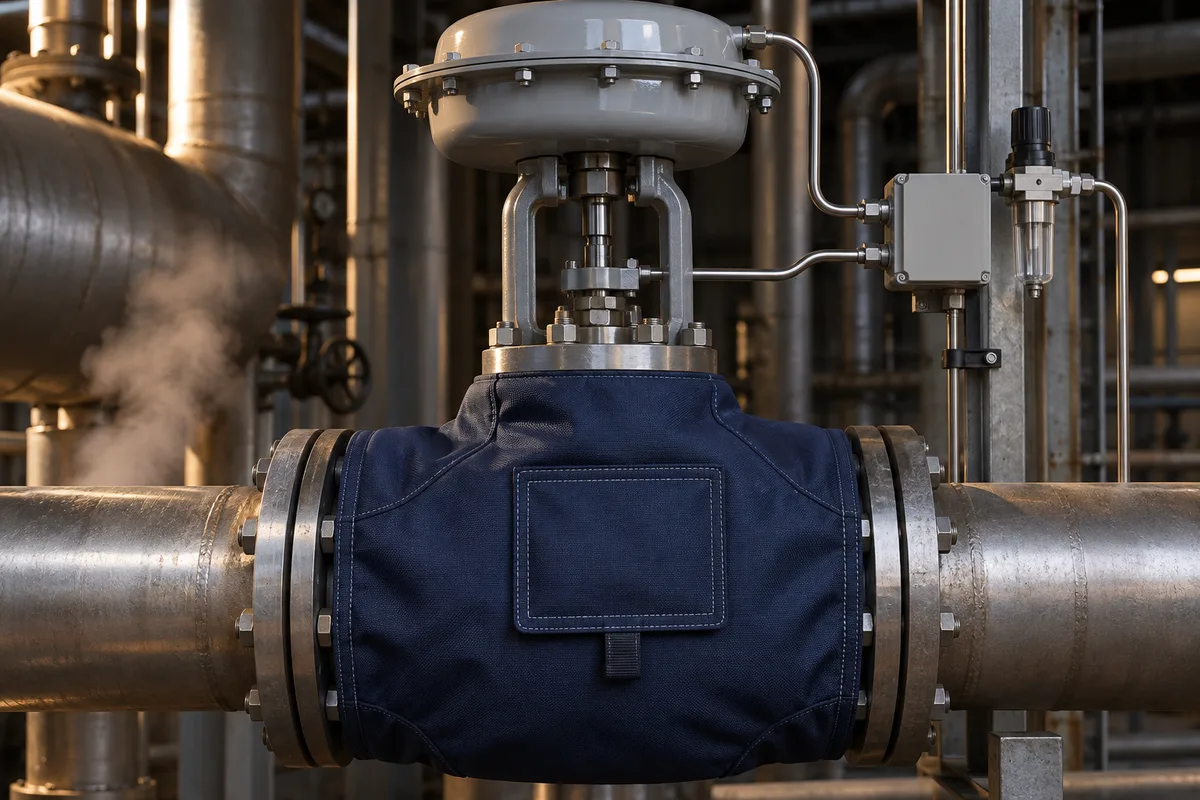
Insulate the valve body while keeping the actuator, tubing and instruments accessible.
Multi-panel body cover with independent instrument access
Specifications and thermal reference →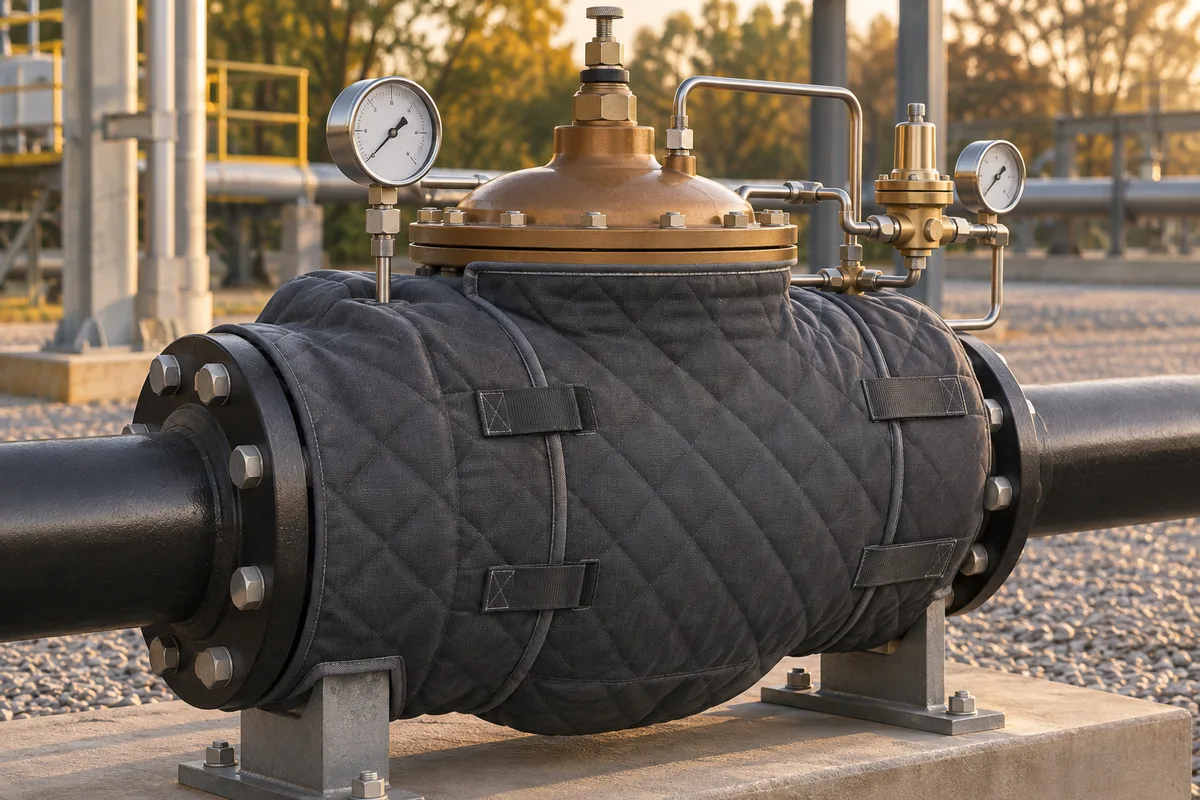
Cover the hot body and keep pilot tubing, adjusters and gauges available to technicians.
Split body jacket shaped around pilot connections
Specifications and thermal reference →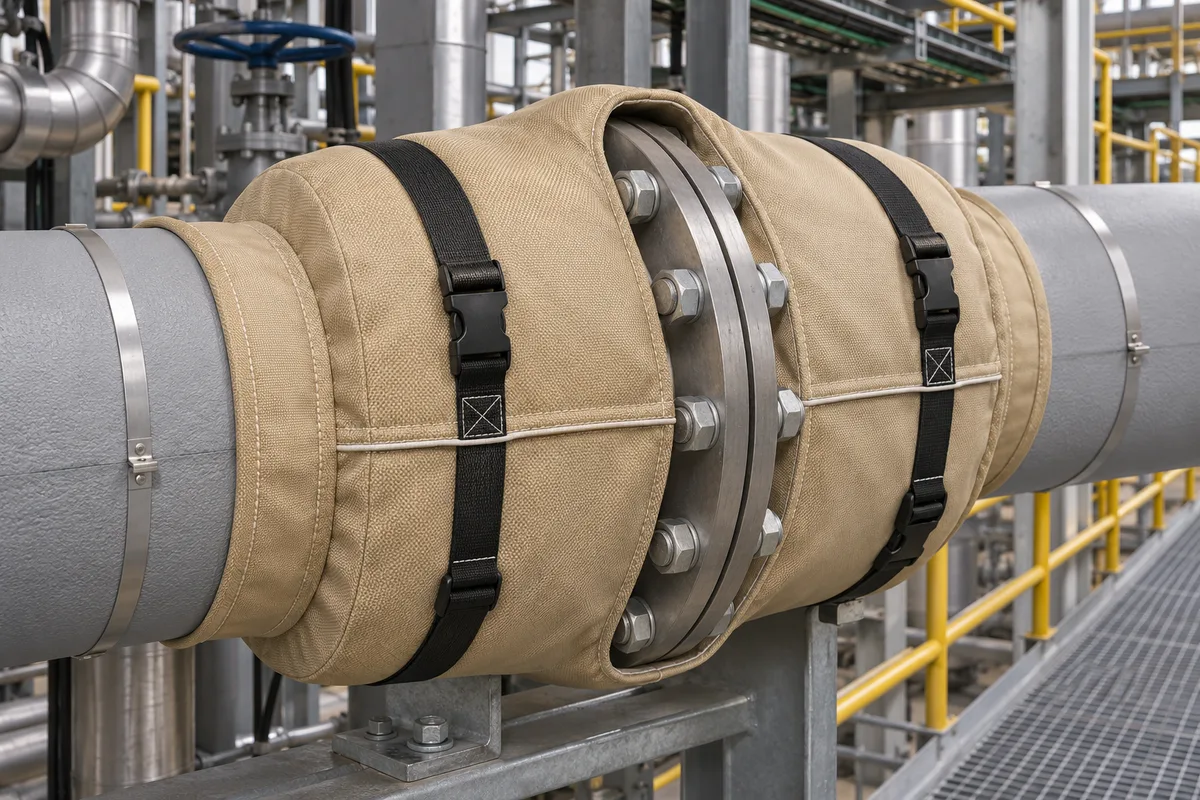
Remove the cover separately and regain bolt access.
Two half-shells with end collars and a side split
Specifications and thermal reference →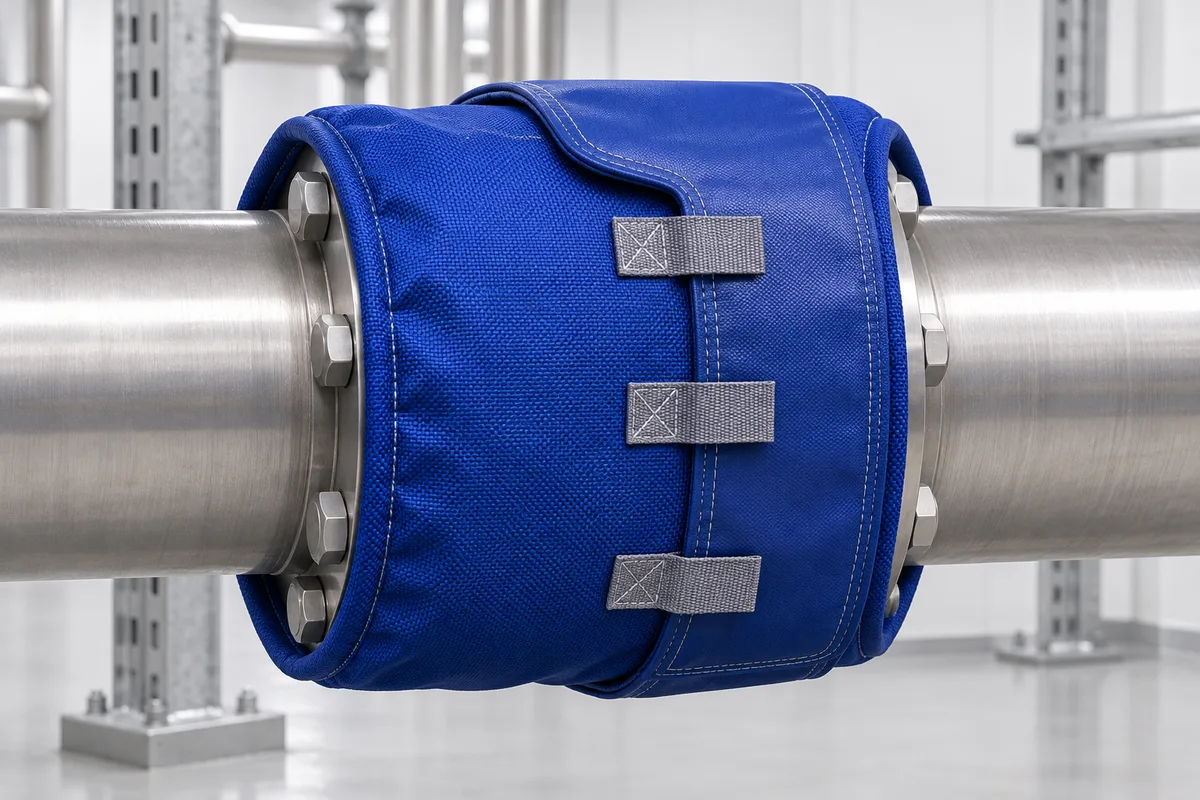
Use an overlapping closure that can be reached from the available working side.
Flexible band with a longitudinal overlap and shaped pipe exits
Specifications and thermal reference →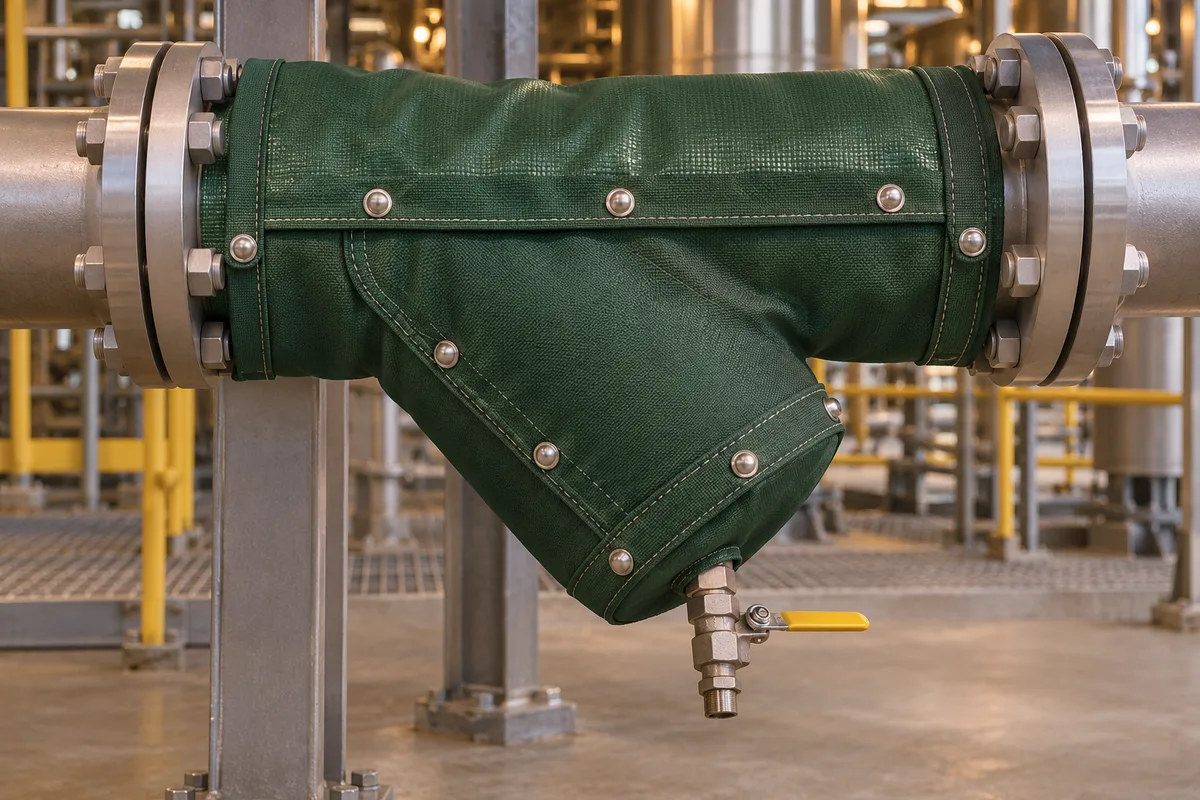
Keep the drain and screen withdrawal path clear for maintenance.
Shaped body and branch jacket with removable branch section
Specifications and thermal reference →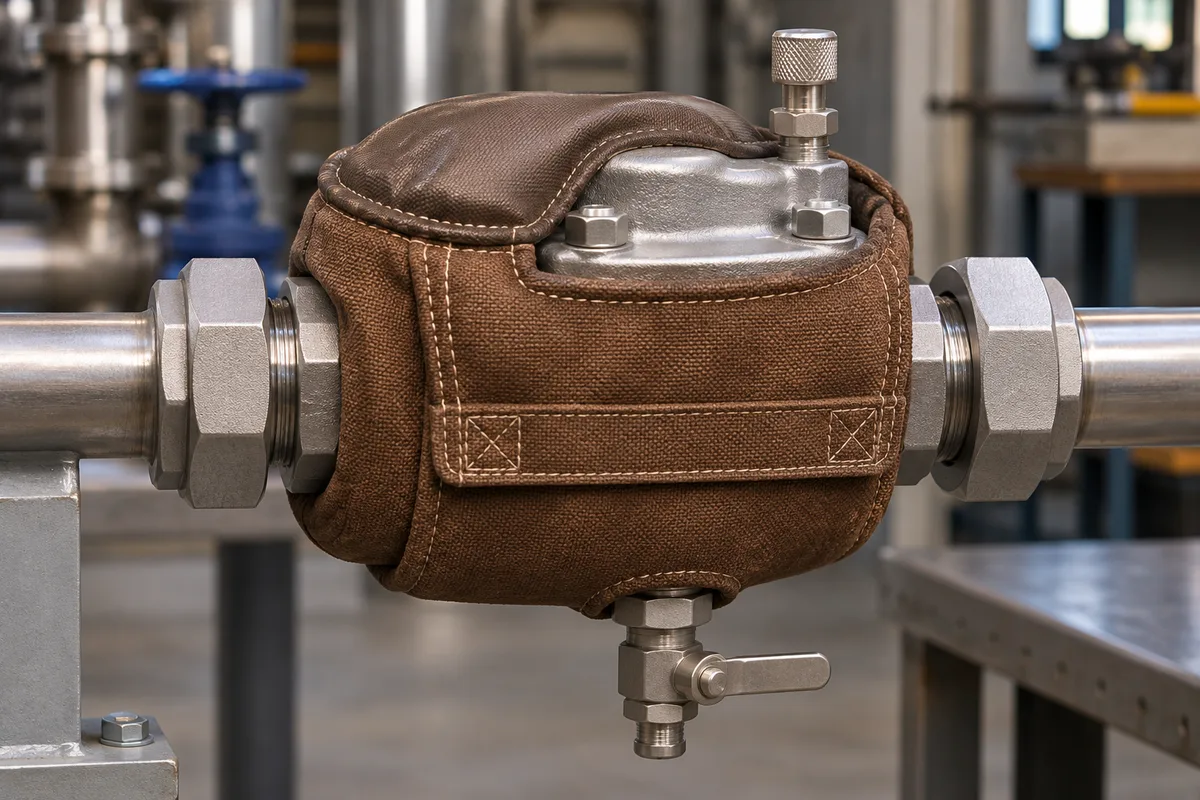
Allow insulation where appropriate while preserving test and blowdown access.
Model-specific small shell with exposed service connections
Specifications and thermal reference →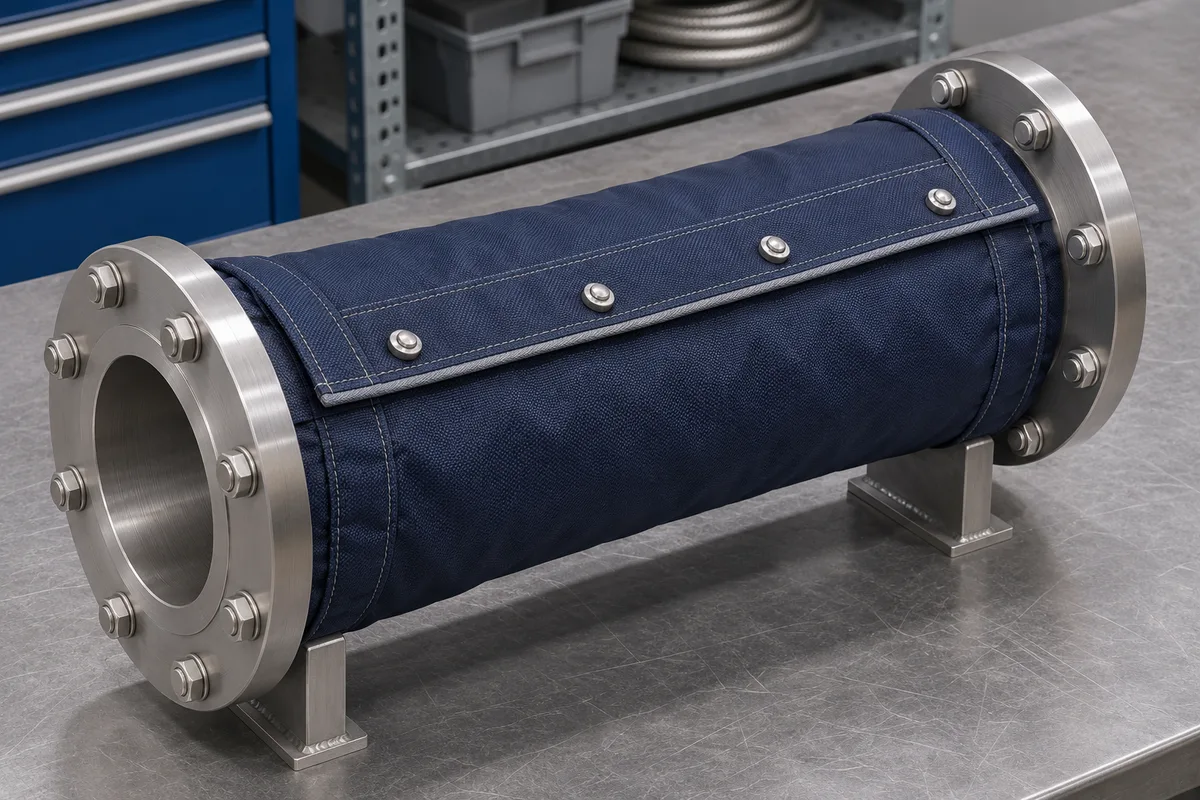
Cover the spool while maintaining access to specified end connections.
Cylindrical sleeve with both joint ends accessible
Specifications and thermal reference →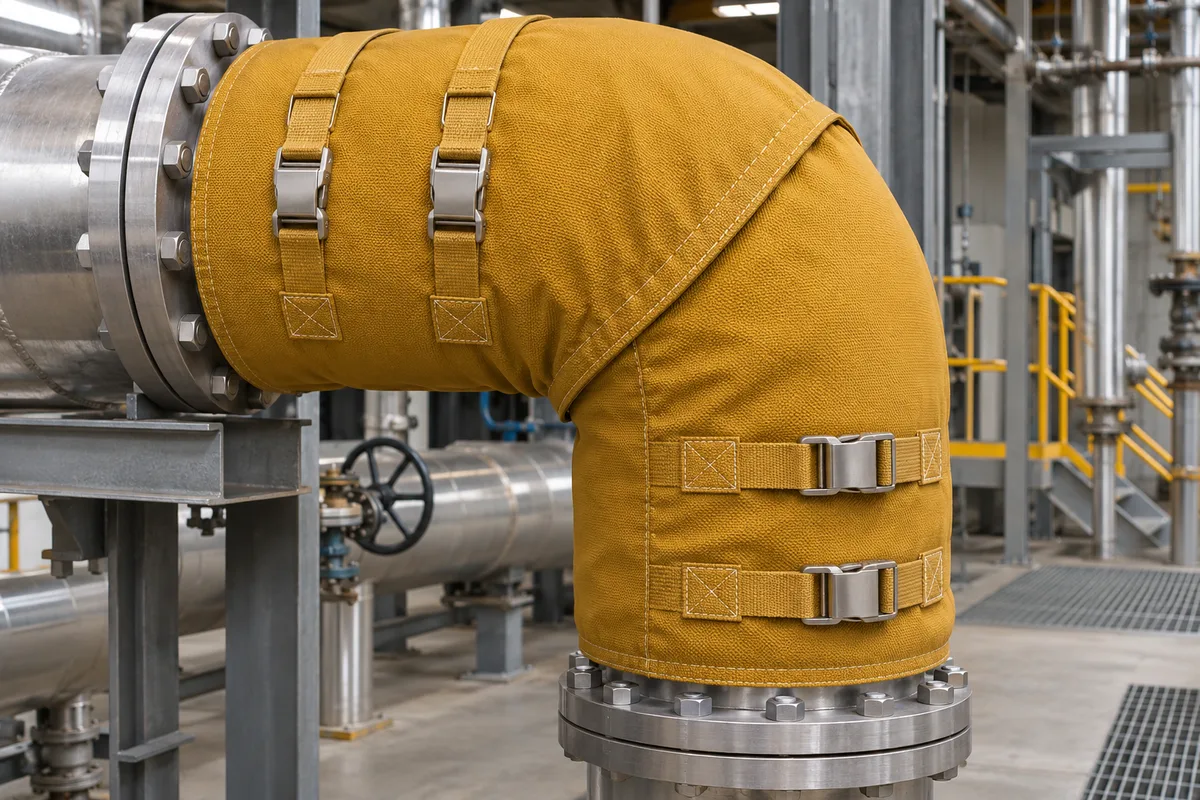
Fit a removable cover to an awkward bend and bridge to adjacent insulation.
Two contoured segments shaped to the bend radius
Specifications and thermal reference →Covers for equipment casings, heaters and access doors.
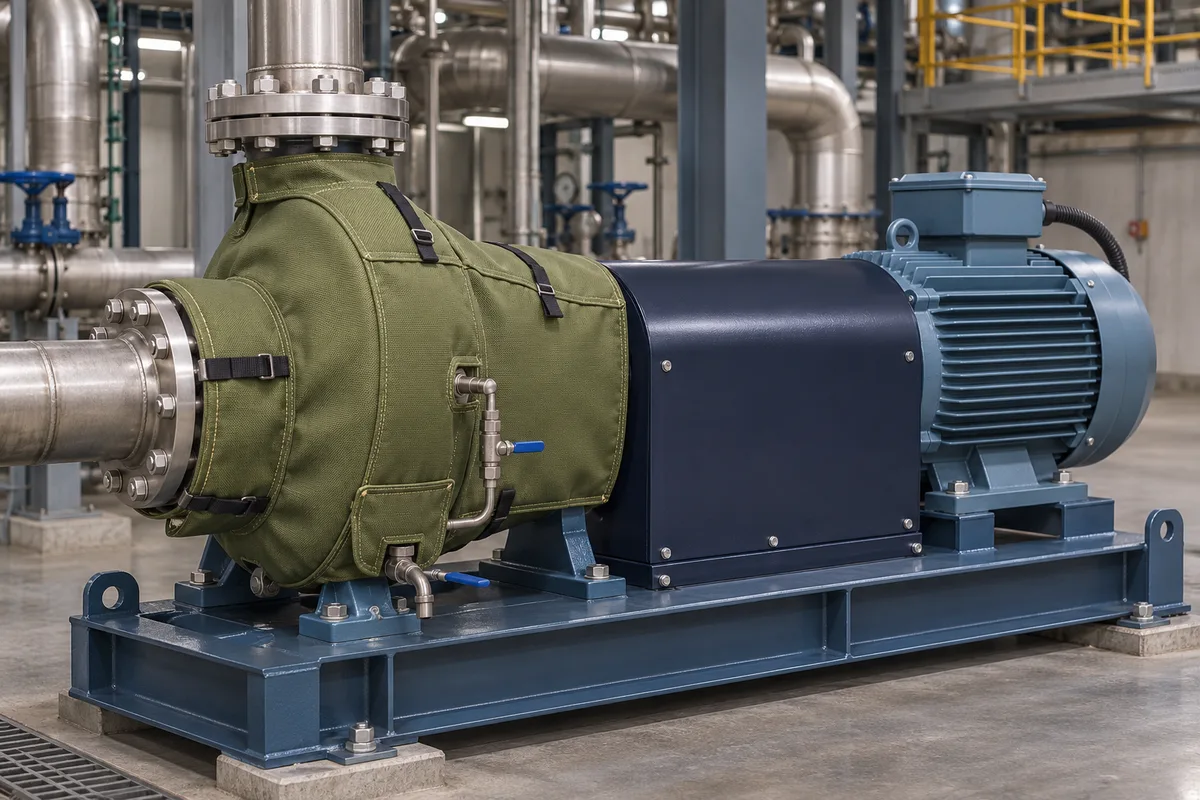
Keep the casing accessible for inspection while leaving the motor, cooling and coupling guard clear.
Removable panels around the hot casing only
Specifications and thermal reference →
Plan sections around nozzle positions and the head removal path.
Removable panels around the head and nozzle projections; identify each panel on the review drawing
Specifications and thermal reference →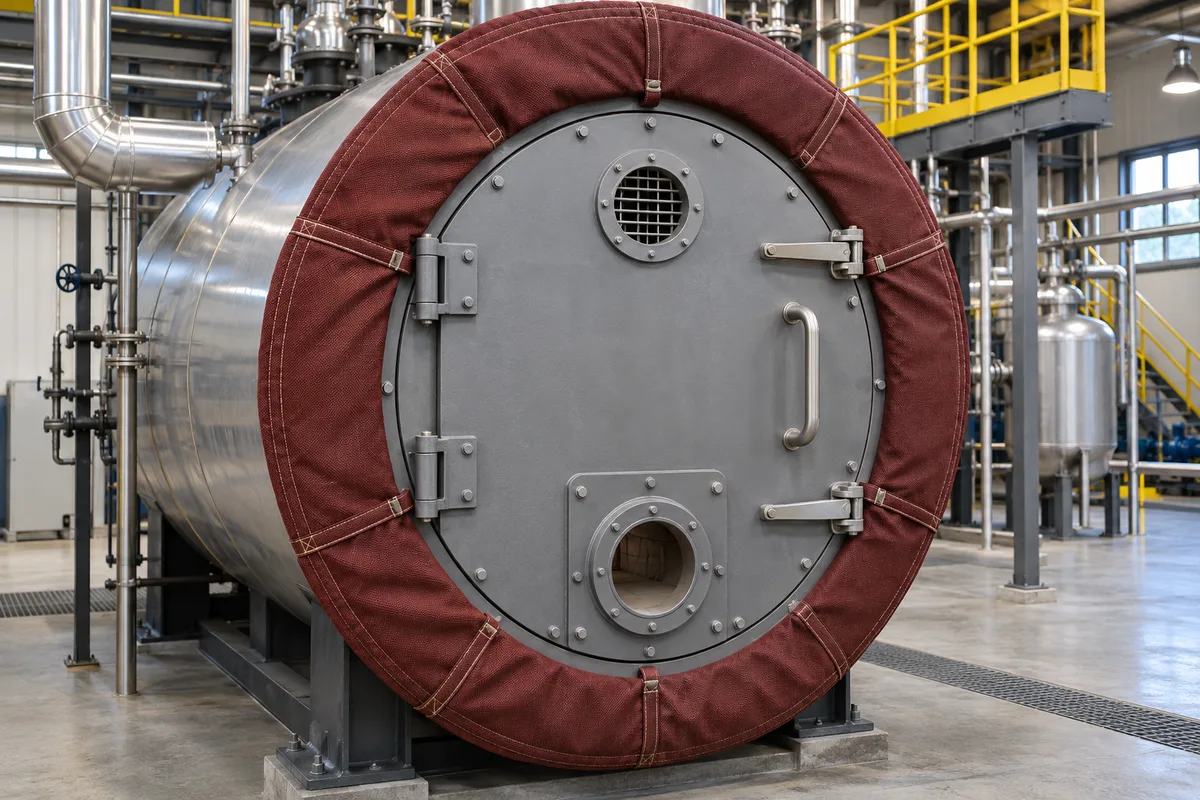
Keep hinges, latches and the inspection path accessible.
Segmented cover for OEM-approved exterior door or perimeter zones
Specifications and thermal reference →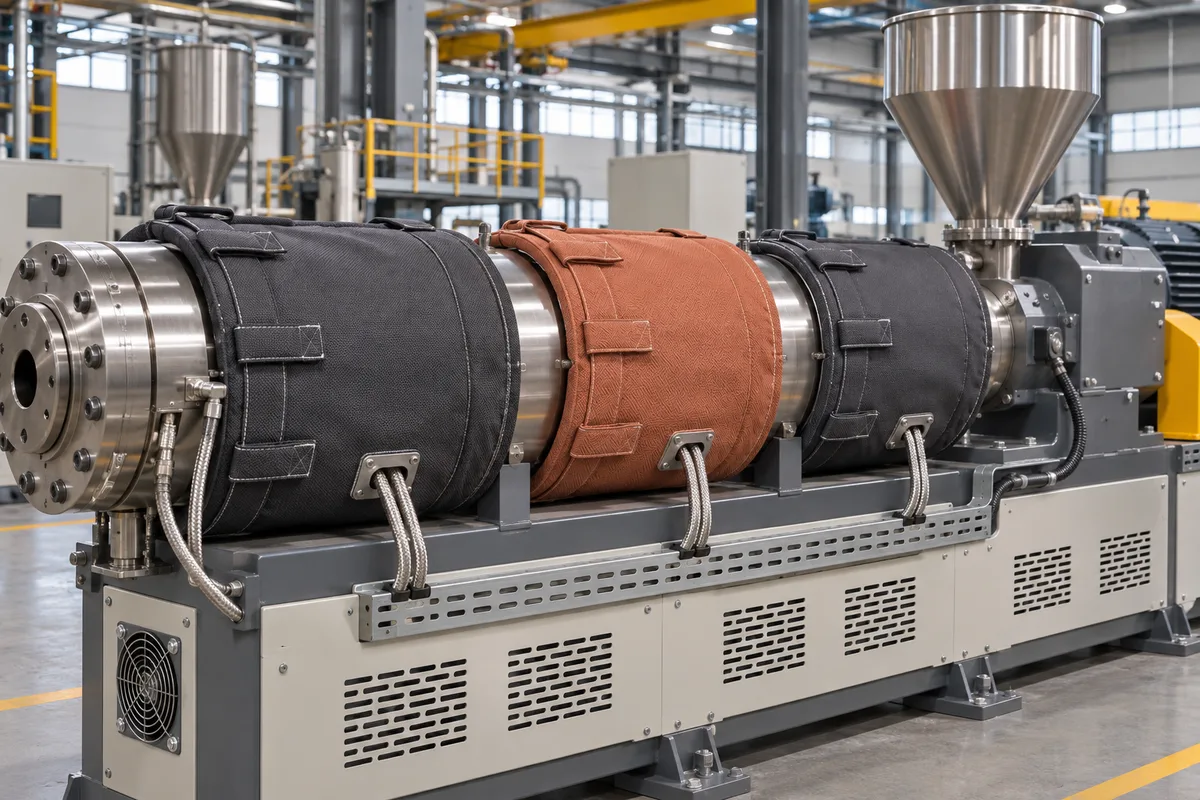
Wrap individual zones while keeping sensor leads, terminals and cooling paths accessible.
Individually removable heater-zone bands
Specifications and thermal reference →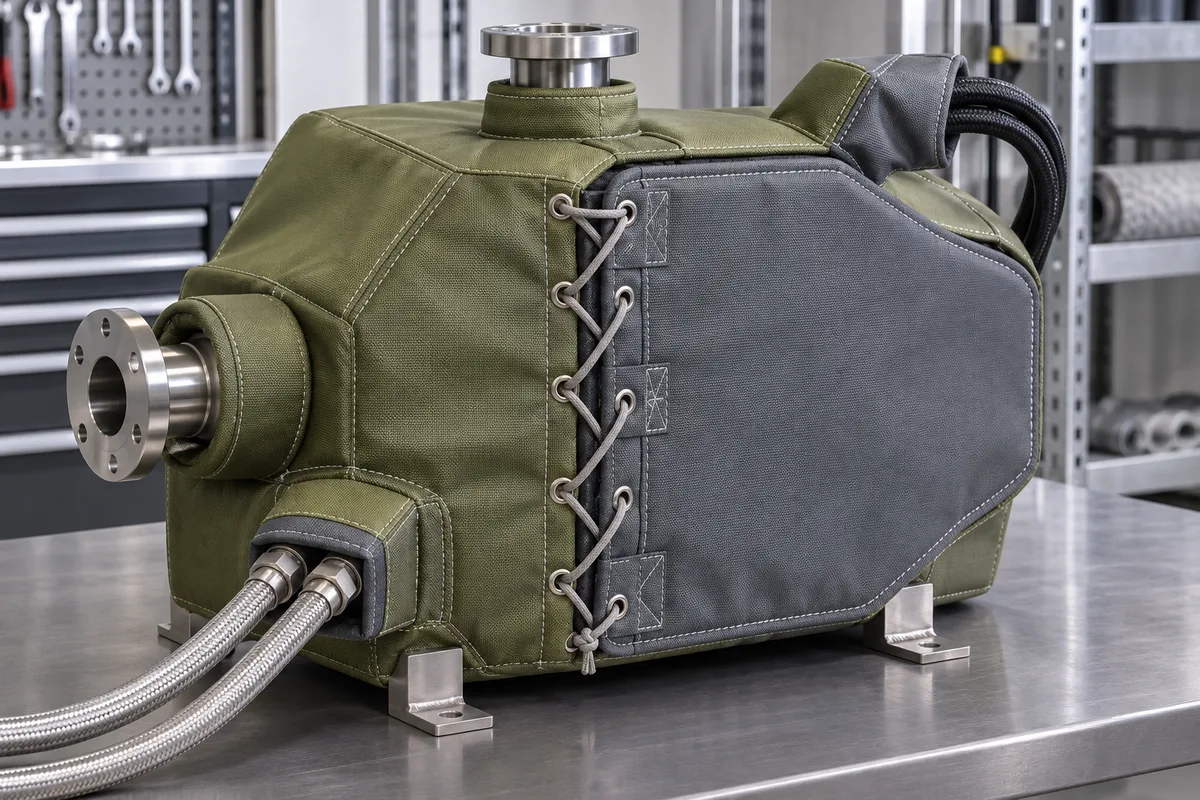
Specify access openings and removal sequence for the actual equipment geometry.
Revision-controlled enclosure with shaped ports and removable panels
Specifications and thermal reference →Facing and seam options for cleaning exposure.
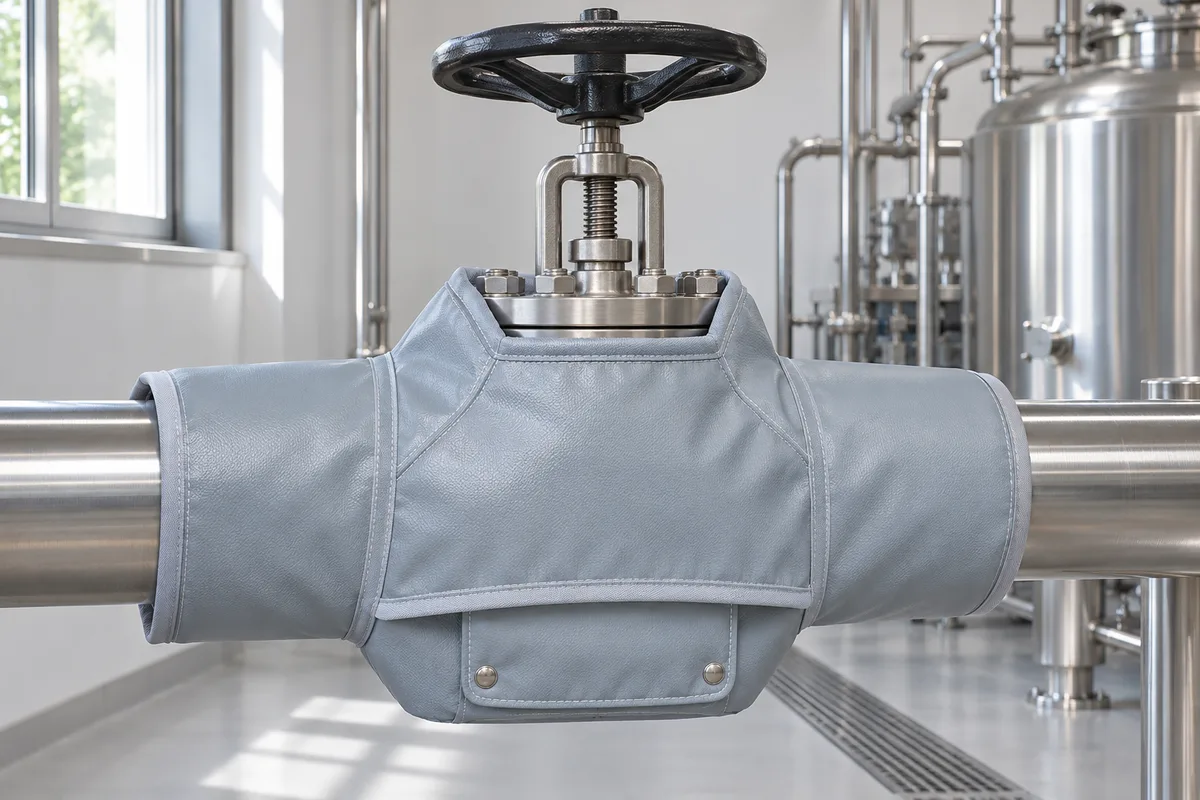
Plan a cleanable exterior and accessible valve hardware around the site’s washdown routine.
Shaped split jacket with a downward-facing overlap
Specifications and thermal reference →Covers planned around condensation control and vapour sealing.
Plan a continuous vapour seal through seams, penetrations and pipe insulation transitions.
Serviceable insulated shell with resealable seams and end transitions
Specifications and thermal reference →