How to check fit and access
Check sensor clearance, ventilation and temperature stability with the machine running under the approved test conditions.
See inspection and acceptance checks →Equipment & process
Wrap individual zones while keeping sensor leads, terminals and cooling paths accessible.
Heater zones on plastics extrusion lines and equipment approved for additional insulation.
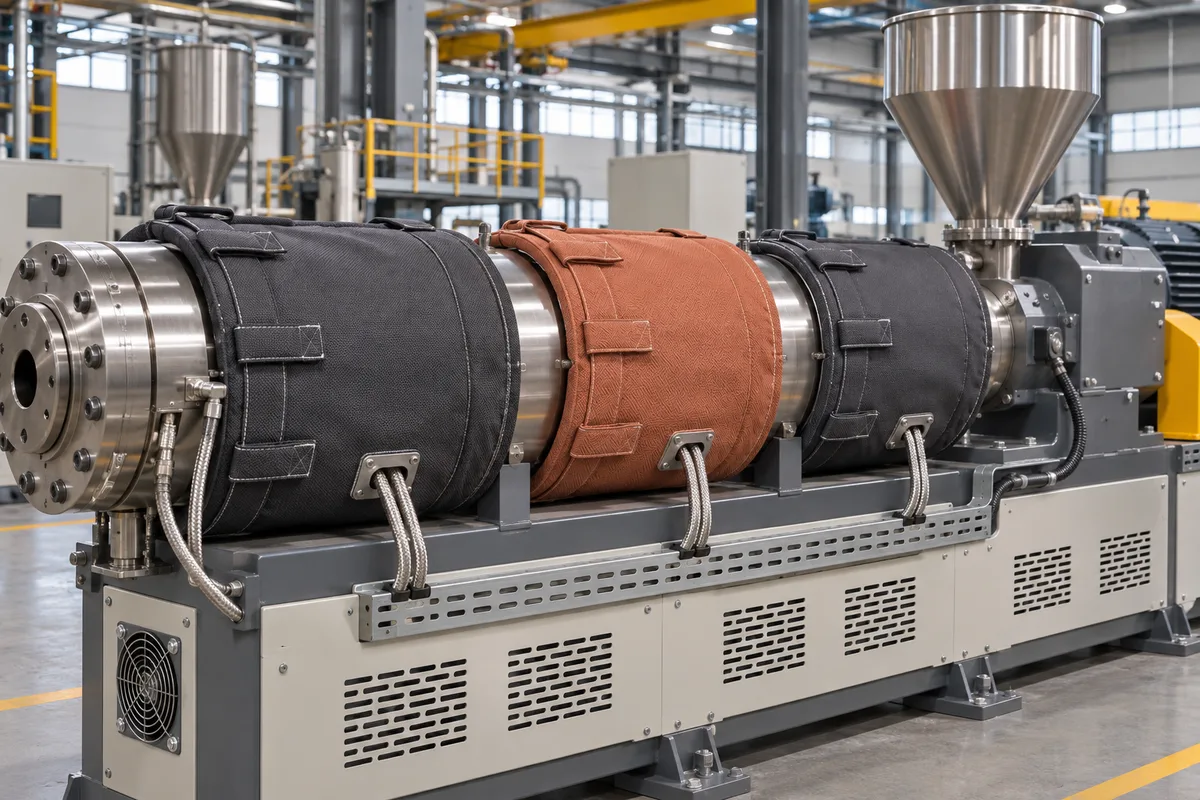
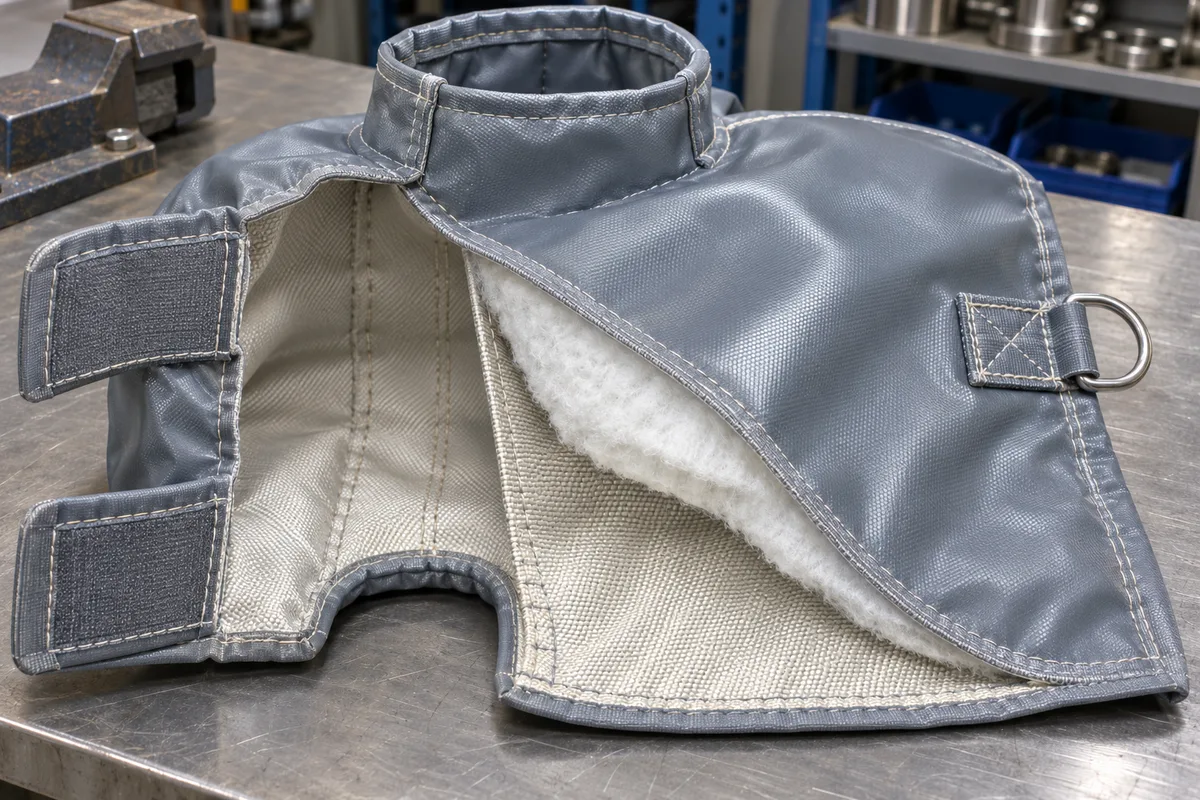
Compare alternate views and see how the jacket opens, fits or fastens.
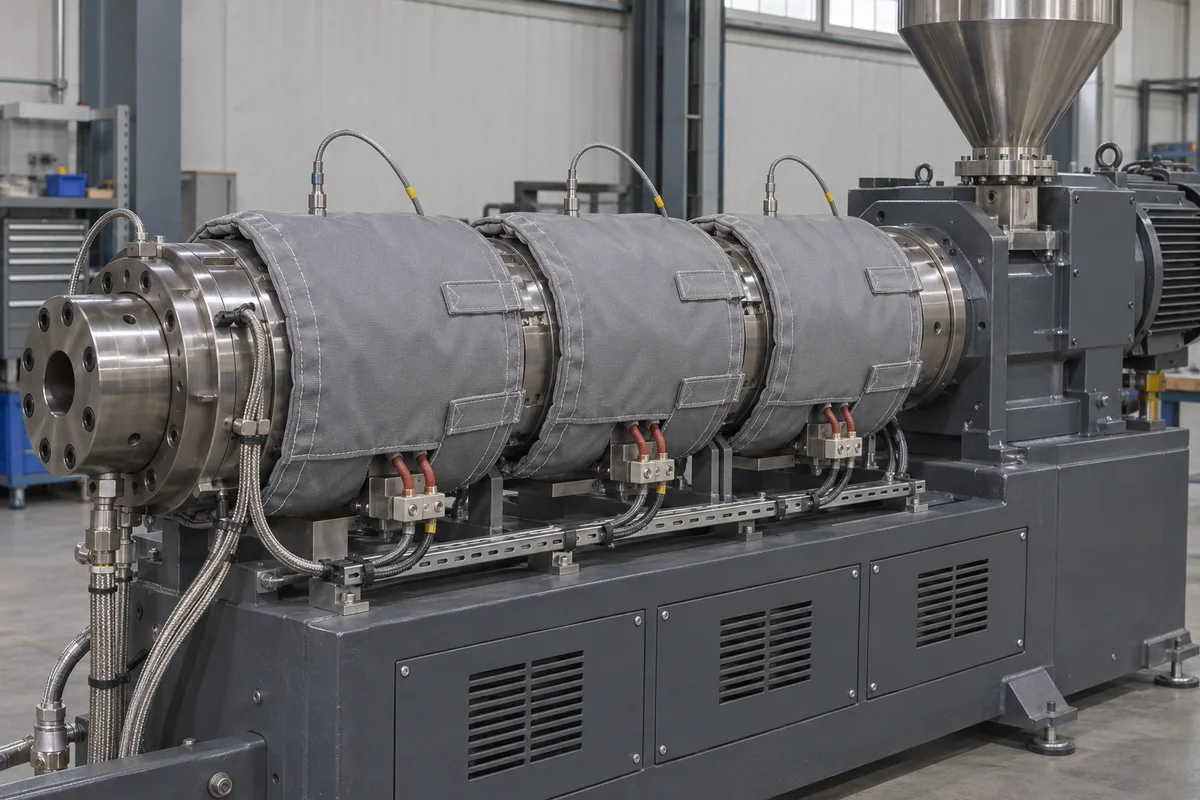
Separate bands let technicians remove one zone while leaving sensors and service wiring exposed.
These are options for a custom quotation. Confirm the assembled materials, dimensions, service limits and finish in writing.
coated textile, enclosed core and detachable fastening.
Check machine temperature stability and outer-surface temperature under the same operating cycle, and obtain OEM approval before trial use.
Agree the conditions, measurement points and target for the proposed cover before quoting. Record the complete assembly’s approved service limits separately from the target outside-face temperature.
Compare thickness, surface temperature and heat loss →Calculated outside-face temperature for Shannon LT550SG at 21.1 °C ambient, flat-surface model. The manufacturer lists a maximum service temperature of 288 °C for this model. The columns show its nominal insulation thicknesses in millimeters and the manufacturer’s approximate inch equivalents.
| Operating temperature | 25 mm (1 in) | 40 mm (1½ in) | 50 mm (2 in) |
|---|---|---|---|
| 232 °C | 57.2 °C | 47.8 °C | 42.3 °C |
| 260 °C | 62.5 °C | 51.7 °C | 45.5 °C |
| 287.8 °C | 67.9 °C | 55.8 °C | 48.9 °C |
These figures describe the cited manufacturer’s model. Shape, airflow, compression, gaps and closures affect the installed result. A lower outside-face temperature still needs to be checked against your site’s contact and inspection requirements.
Read the manufacturer’s data →Check sensor clearance, ventilation and temperature stability with the machine running under the approved test conditions.
See inspection and acceptance checks →Send zone diameter and width, peak temperature, cable exits, ventilation and the equipment maker’s requirements.
Include a drawing or scaled photos, quantity and delivery location. Once the key measurements are available, we can review a CAD drawing or annotated design together.
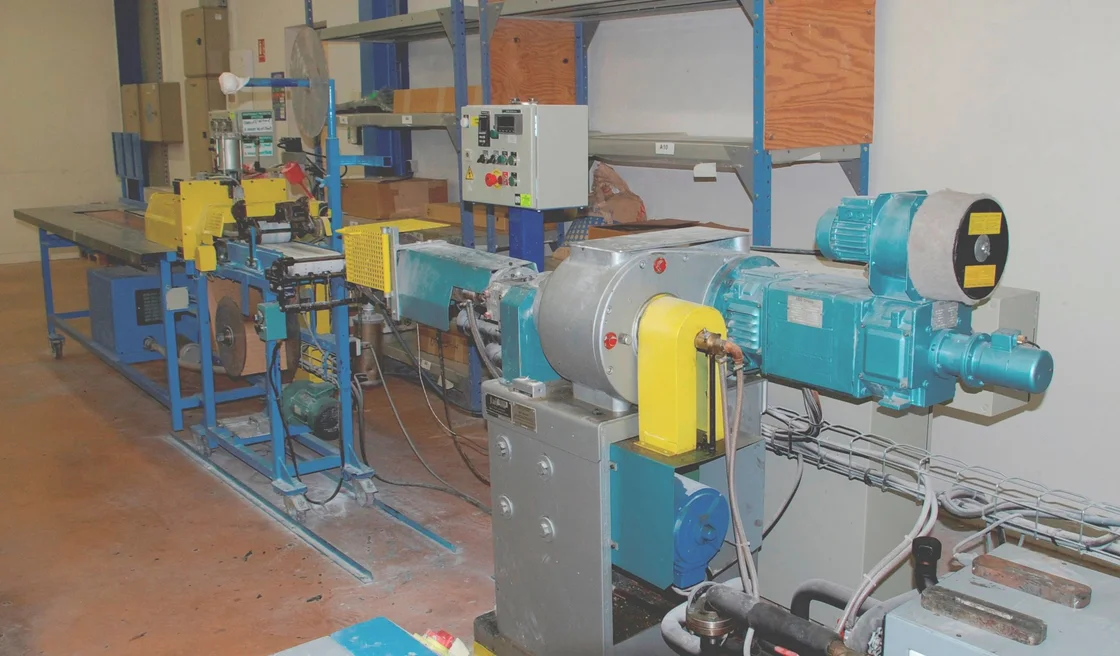
Use a site photo like this to show nearby pipework, access obstructions and service points. Send your own photos from two angles, with a scale reference in the same plane as the dimensions.
Prepare a photo set →