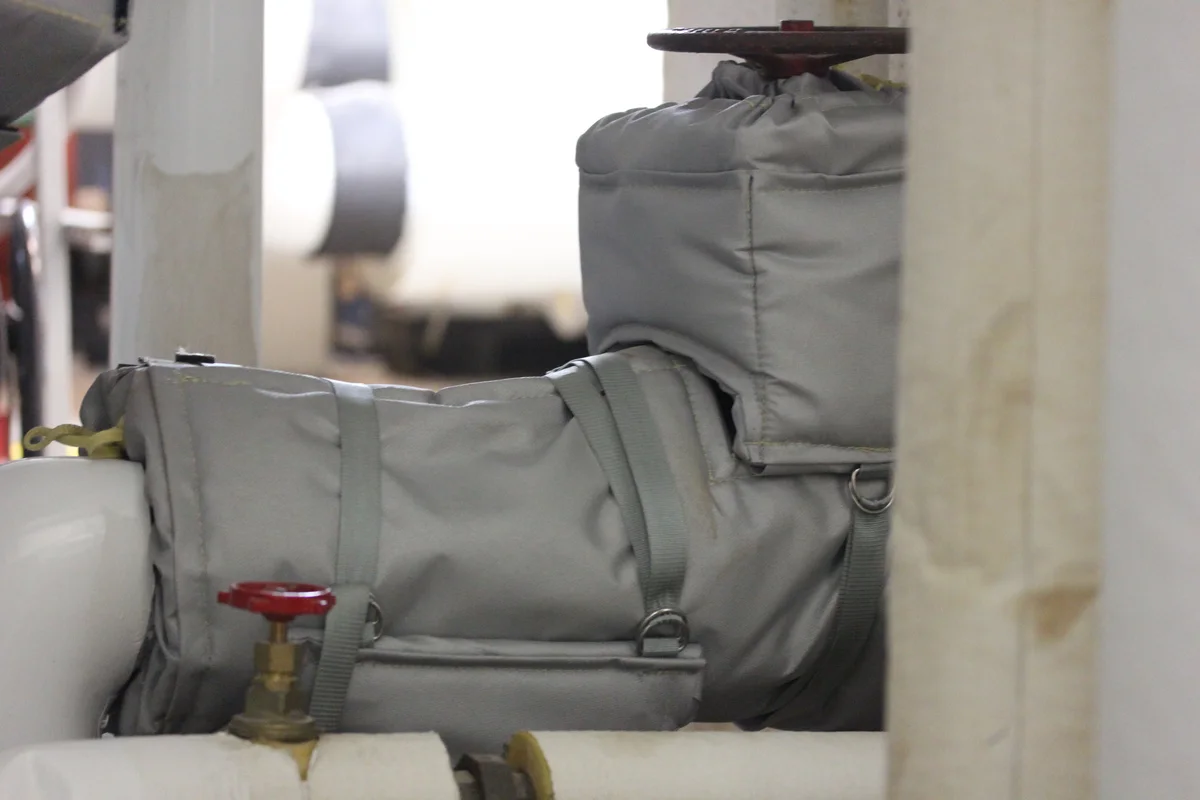
How to check fit and access
Trial-fit, open and close through full travel, then remove and refit without contacting the stem or blocking the packing gland.
Open the example review drawing →
See inspection and acceptance checks →Steam & hot water
Cover the valve body and keep the rising stem and handwheel free to travel.
Boiler headers, campus steam mains and hot-water isolation valves.
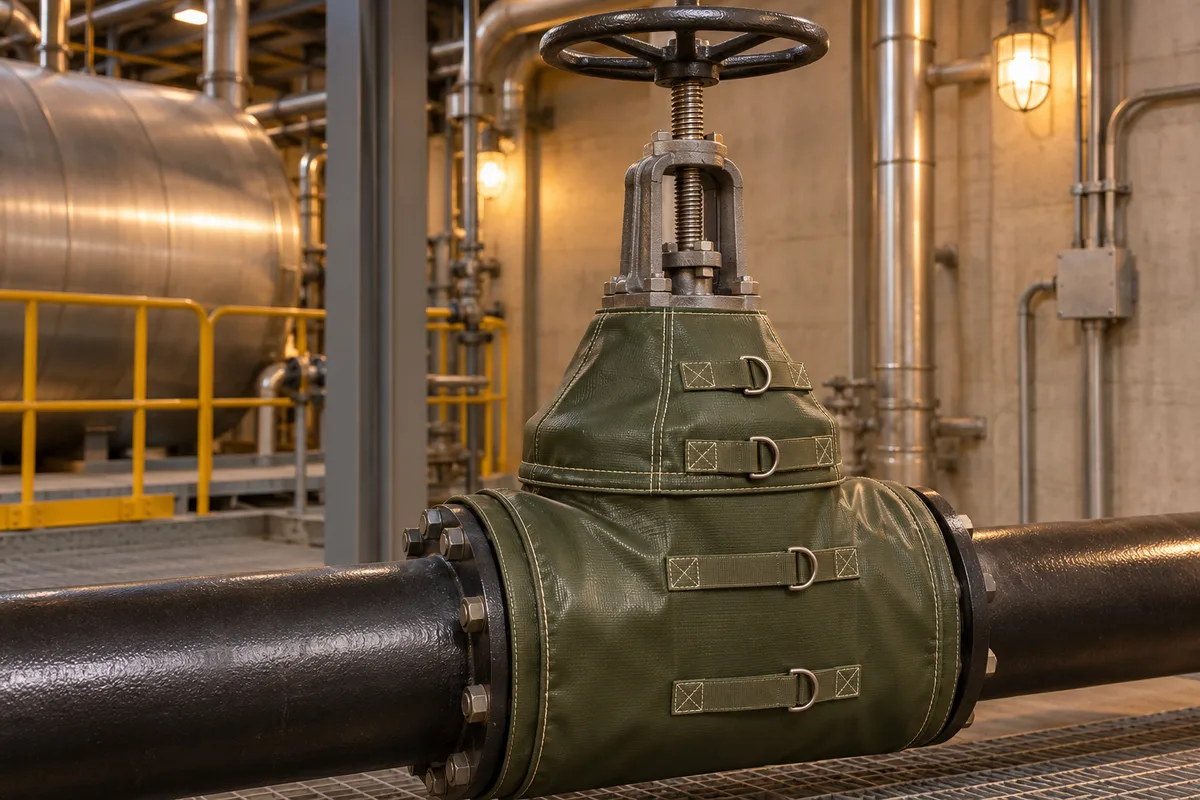
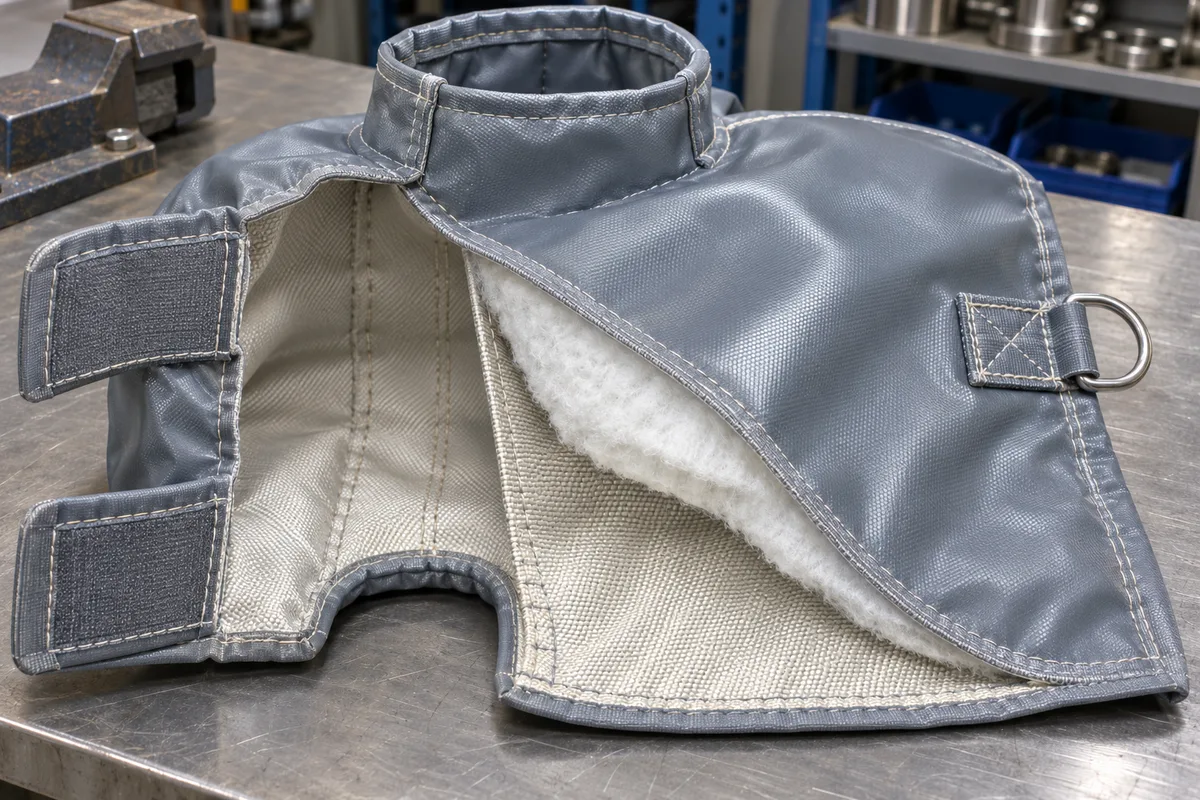
Follow one section of the olive jacket from the outside cover down to the hot valve body.
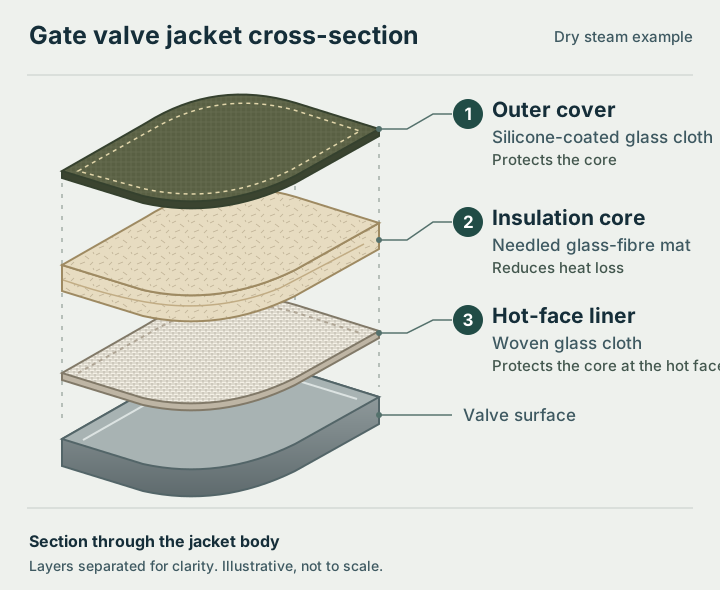
Protects the insulation core from rubbing during routine handling. The coated cloth remains flexible enough to follow the valve body.
Slows heat loss through the jacket. The flexible mat follows the curved body. Choose the core thickness for the target surface temperature and the space available.
Faces the hot valve and encloses the core. The woven fabric protects the mat during removal and refitting. Check the liner and sewing thread against the actual hot-face temperature.
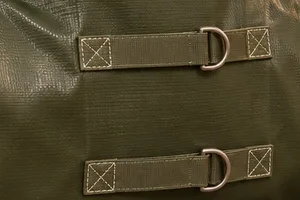
The strap and metal D-ring secure the jacket. Bound edges and stitching keep the core enclosed. Release the straps from the working side and keep the stem and handwheel clear.
This is a construction example for dry steam service. Final materials, core thickness and assembly temperature limits are confirmed for the equipment and operating conditions.
Compare jacket materials by service →Compare alternate views and see how the jacket opens, fits or fastens.
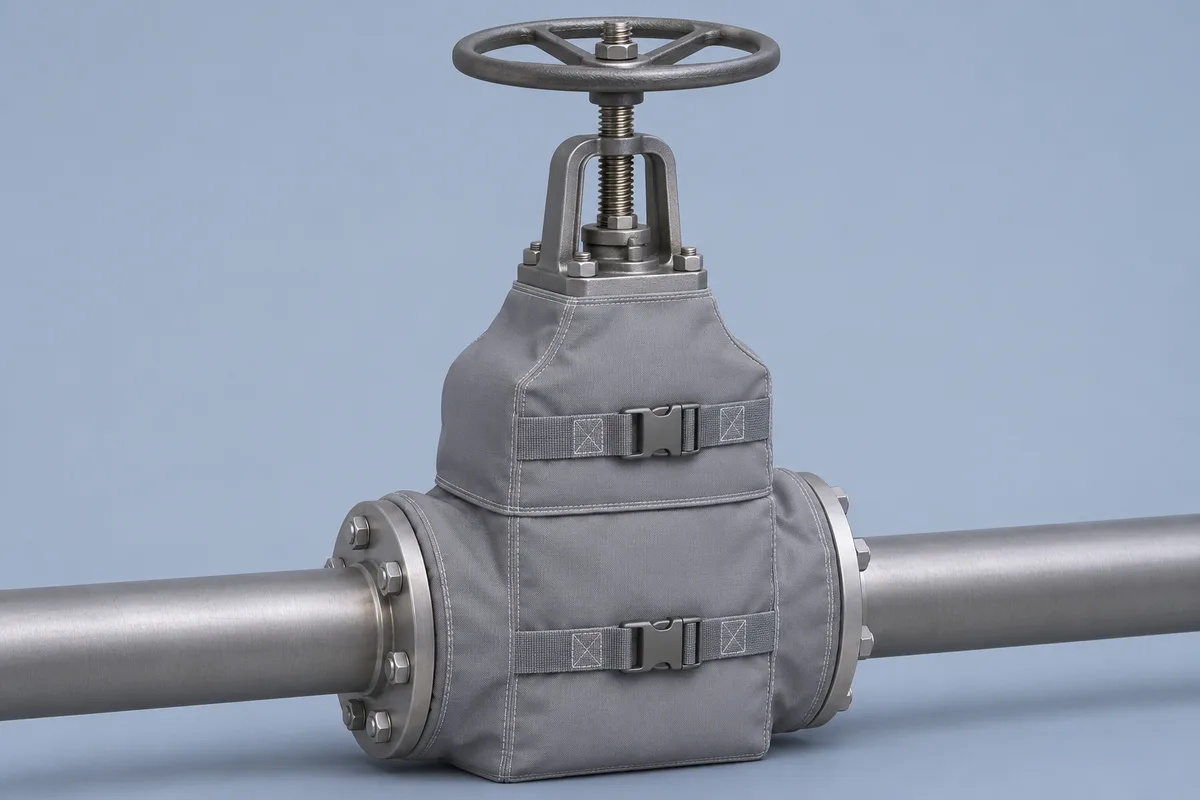
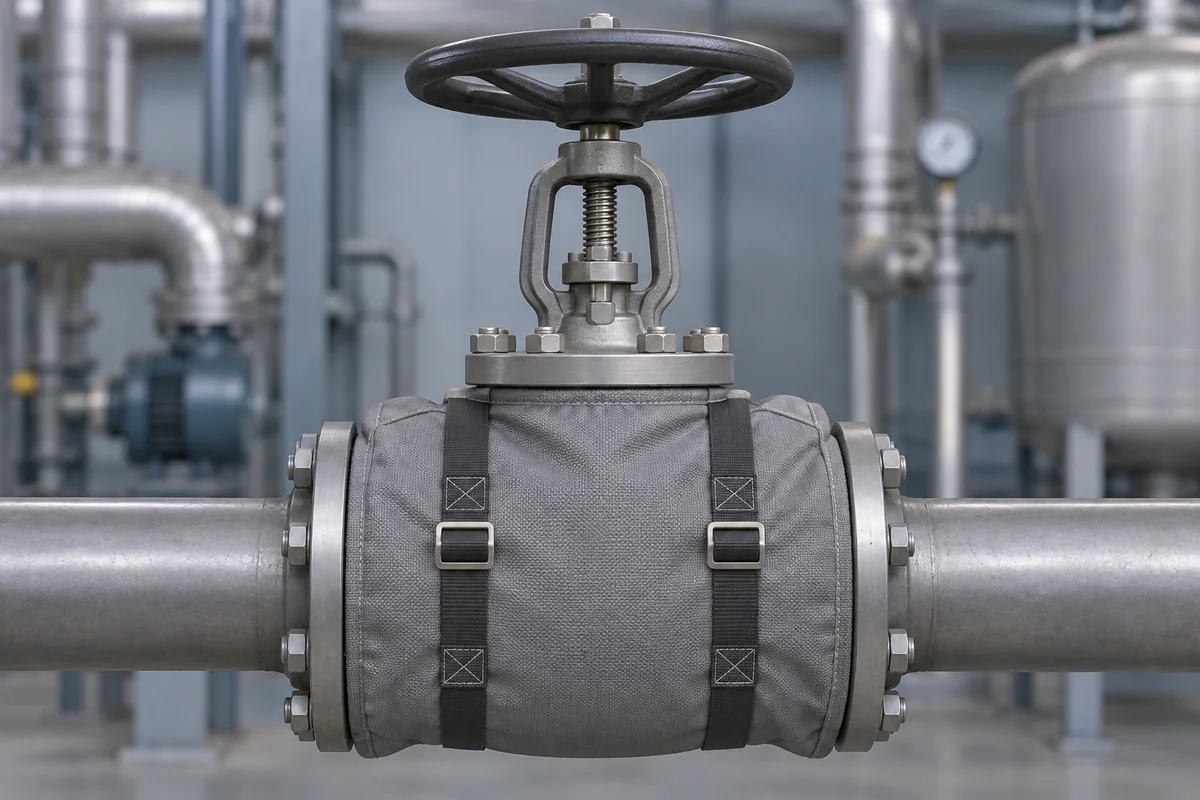
A separate bonnet section lets a technician lift the body cover away without trapping it under the rising stem.
These are options for a custom quotation. Confirm the assembled materials, dimensions, service limits and finish in writing.
coated textile, enclosed core and detachable fastening.
Compare the product views above ↑
Industry construction reference →
Ask for a marked drawing showing full stem travel, handwheel clearance and access to the packing gland.
Request the facing, core and liner data sheets, the proposed core thickness and the operating conditions used for any surface-temperature estimate. The Thermaxx hot-jacket data sheet is a third-party example of how these conditions are stated.
Set an outer-surface temperature or heat-loss target at the normal and peak valve surface temperatures. Include the seam and stem opening in the review.
Agree the conditions, measurement points and target for the proposed cover before quoting. Record the complete assembly’s approved service limits separately from the target outside-face temperature.
Compare thickness, surface temperature and heat loss →Calculated outside-face temperature for Shannon LT450SS at 21.1 °C ambient, flat-surface model. The manufacturer lists a maximum service temperature of 232 °C for this model. The columns show its nominal insulation thicknesses in millimeters and the manufacturer’s approximate inch equivalents.
| Operating temperature | 25 mm (1 in) | 40 mm (1½ in) | 50 mm (2 in) |
|---|---|---|---|
| 121 °C | 37.9 °C | 33.3 °C | 30.8 °C |
| 177 °C | 47.3 °C | 40.3 °C | 36.3 °C |
| 232 °C | 57.2 °C | 47.8 °C | 42.3 °C |
These figures describe the cited manufacturer’s model. Shape, airflow, compression, gaps and closures affect the installed result. A lower outside-face temperature still needs to be checked against your site’s contact and inspection requirements.
Read the manufacturer’s data →Trial-fit, open and close through full travel, then remove and refit without contacting the stem or blocking the packing gland.
Open the example review drawing →
See inspection and acceptance checks →Send body length, flange OD, bonnet shape and fully open stem travel.
Include a drawing or scaled photos, quantity and delivery location. Once the key measurements are available, we can review a CAD drawing or annotated design together.
Use a site photo like this to show nearby pipework, access obstructions and service points. Send your own photos from two angles, with a scale reference in the same plane as the dimensions.
Prepare a photo set →