
How to check fit and access
Approve first-article fit, material schedule and access checks before repeat quantities.
See inspection and acceptance checks →Equipment & process
Specify access openings and removal sequence for the actual equipment geometry.
Irregular housings and repeated builds where the buyer supplies a controlled drawing.
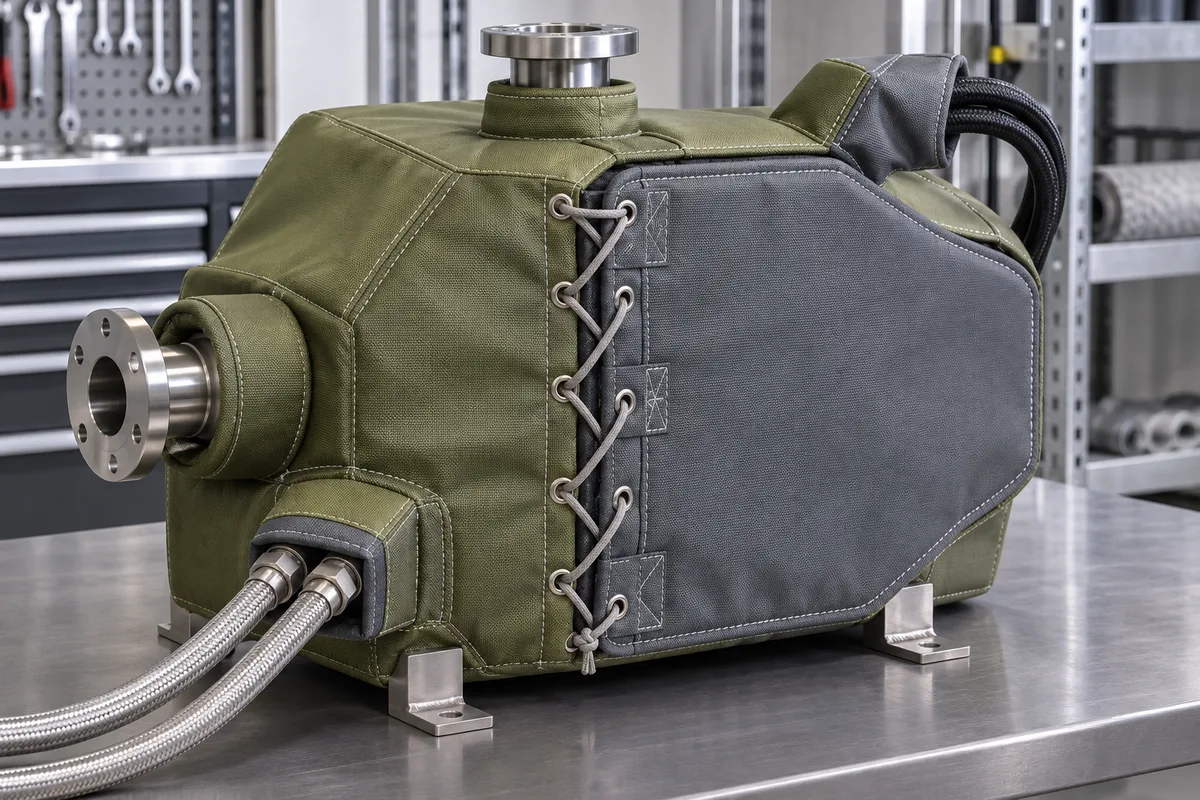
Compare alternate views and see how the jacket opens, fits or fastens.
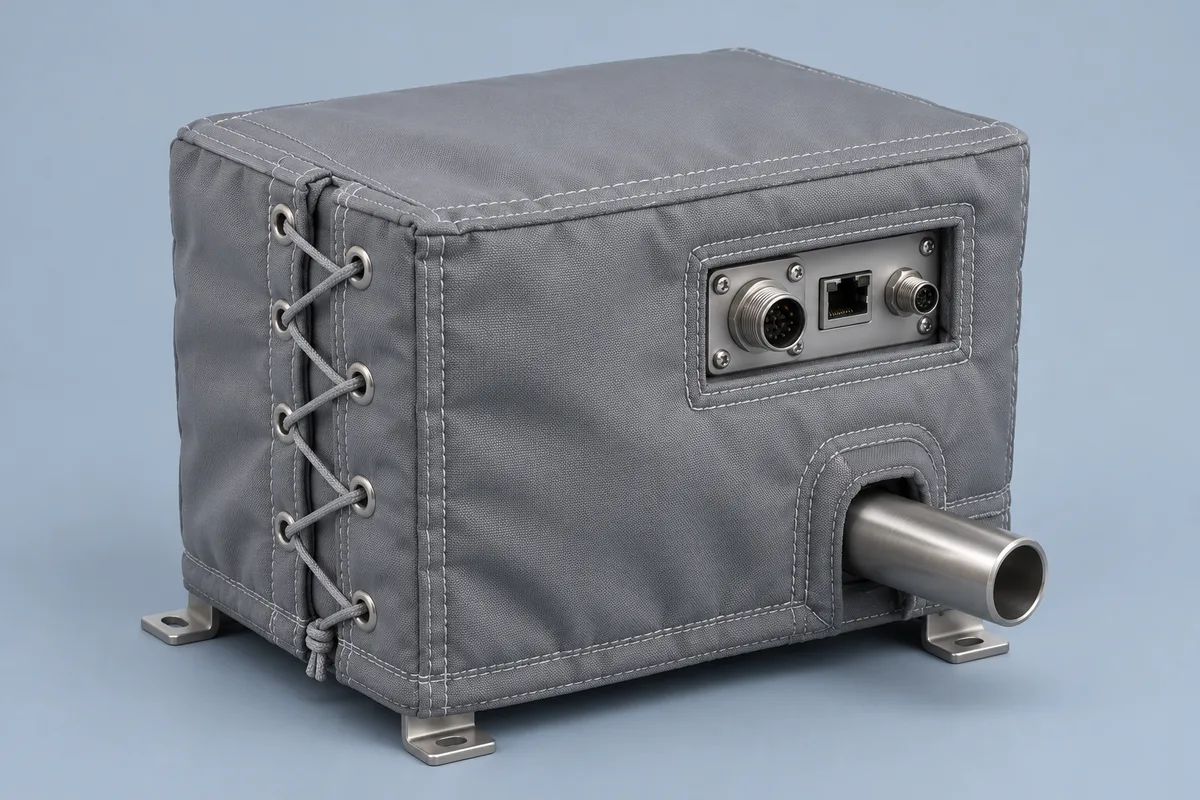
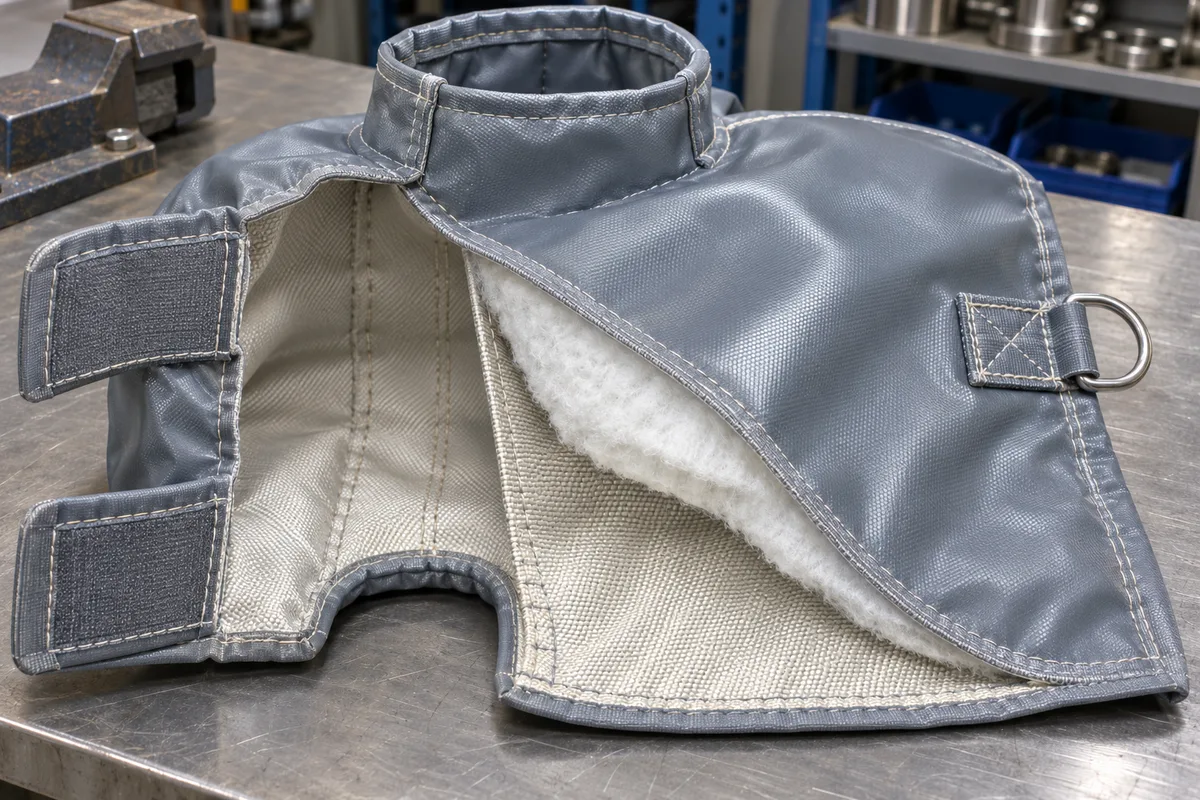
A first article lets the buyer check ports, seams and removal sequence before repeating a shape across a machine series.
These are options for a custom quotation. Confirm the assembled materials, dimensions, service limits and finish in writing.
coated textile, enclosed core and detachable fastening.
Agree one testable thermal objective and operating cycle for the first article, then record them against its revision.
Agree the conditions, measurement points and target for the proposed cover before quoting. Record the complete assembly’s approved service limits separately from the target outside-face temperature.
Compare thickness, surface temperature and heat loss →Agree normal and peak equipment surface temperature, duty cycle, ambient conditions, coverage and the test locations. For a hot assembly, the published steam table illustrates how thickness affects outer-face temperature under specified conditions.
See reference temperature comparisons →Approve first-article fit, material schedule and access checks before repeat quantities.
See inspection and acceptance checks →Send a revision-controlled outline, duty conditions, connector positions and target quantity.
Include a drawing or scaled photos, quantity and delivery location. Once the key measurements are available, we can review a CAD drawing or annotated design together.