
How to check fit and access
Verify all exclusion zones and that the cover does not obstruct guard removal, cooling or inspection.
See inspection and acceptance checks →Equipment & process
Keep the casing accessible for inspection while leaving the motor, cooling and coupling guard clear.
Hot condensate and process pumps where the equipment maker allows casing insulation.
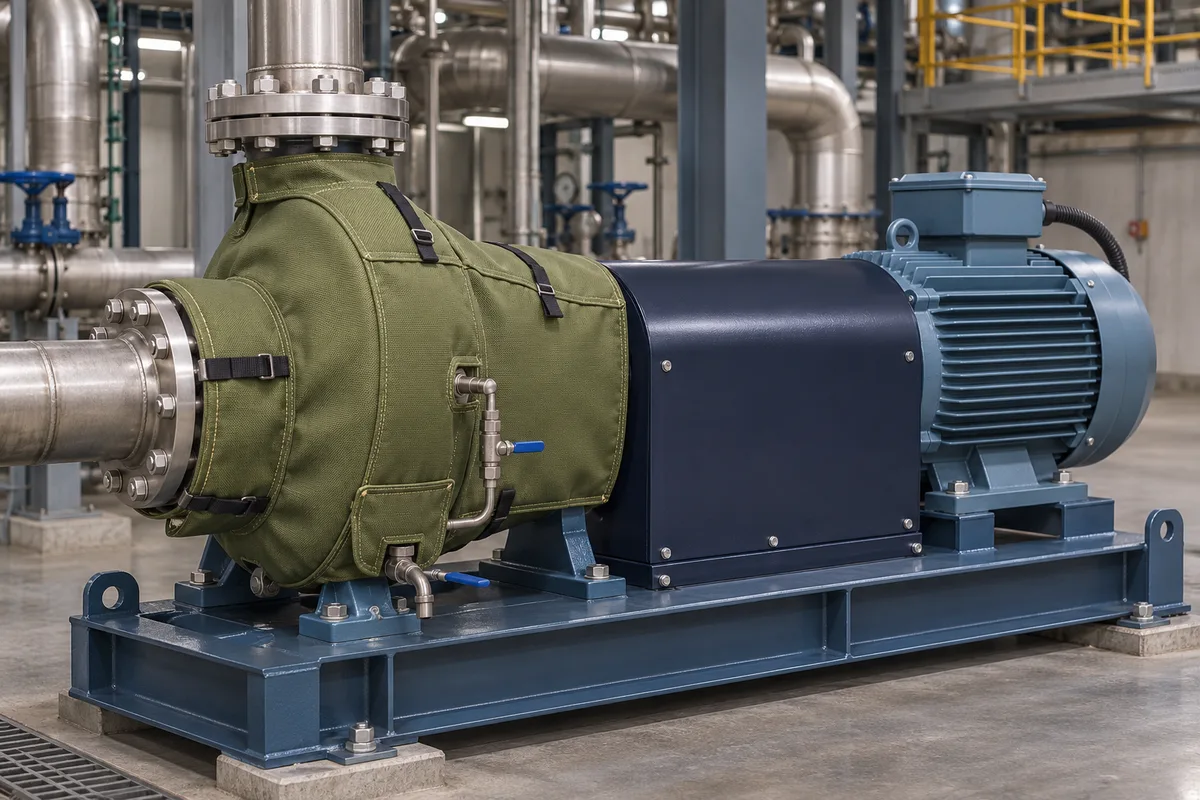
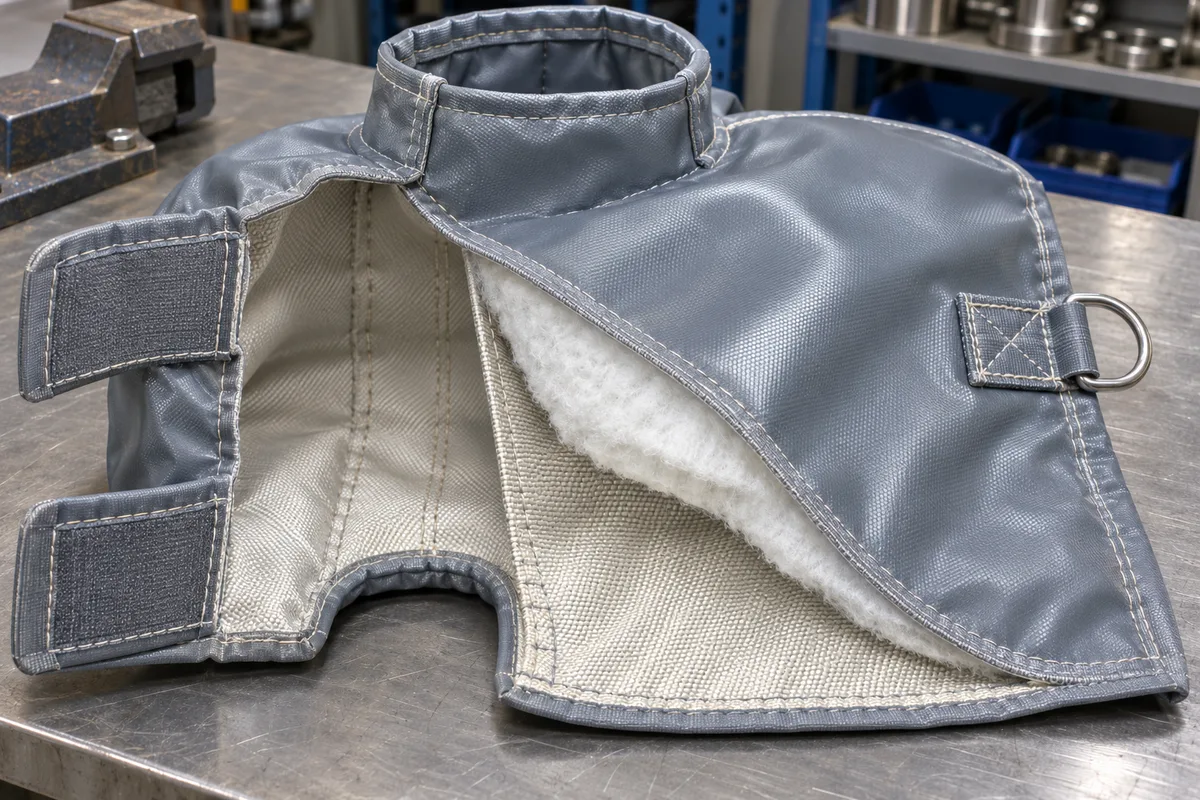
Compare alternate views and see how the jacket opens, fits or fastens.
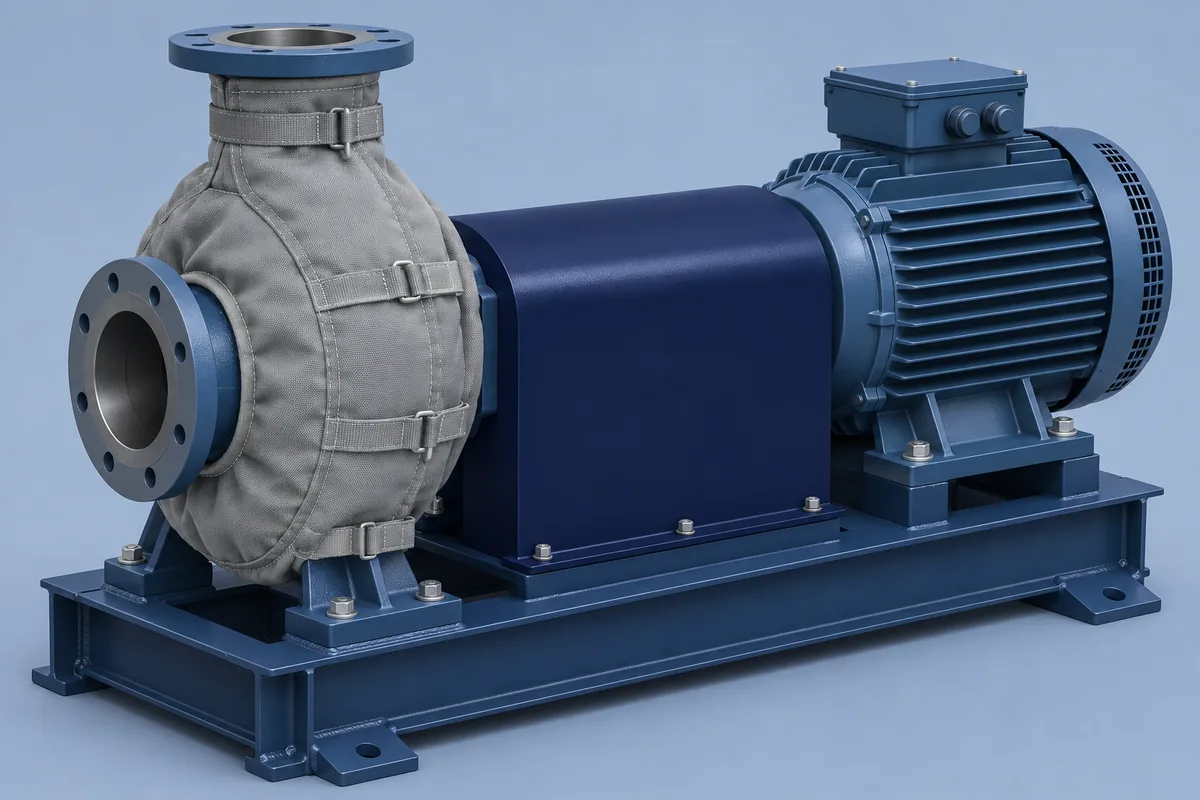
Casing panels preserve pump service access while keeping the motor and coupling guard clear.
These are options for a custom quotation. Confirm the assembled materials, dimensions, service limits and finish in writing.
coated textile, enclosed core and detachable fastening.
Review heat around the casing, bearing and seal area with the equipment maker before setting a surface-temperature target.
Agree the conditions, measurement points and target for the proposed cover before quoting. Record the complete assembly’s approved service limits separately from the target outside-face temperature.
Compare thickness, surface temperature and heat loss →Calculated outside-face temperature for Shannon LT450SS at 21.1 °C ambient, flat-surface model. The manufacturer lists a maximum service temperature of 232 °C for this model. The columns show its nominal insulation thicknesses in millimeters and the manufacturer’s approximate inch equivalents.
| Operating temperature | 25 mm (1 in) | 40 mm (1½ in) | 50 mm (2 in) |
|---|---|---|---|
| 121 °C | 37.9 °C | 33.3 °C | 30.8 °C |
| 177 °C | 47.3 °C | 40.3 °C | 36.3 °C |
| 232 °C | 57.2 °C | 47.8 °C | 42.3 °C |
These figures describe the cited manufacturer’s model. Shape, airflow, compression, gaps and closures affect the installed result. A lower outside-face temperature still needs to be checked against your site’s contact and inspection requirements.
Read the manufacturer’s data →Verify all exclusion zones and that the cover does not obstruct guard removal, cooling or inspection.
See inspection and acceptance checks →Send pump model, casing drawing, seal and drain locations, guard position and service clearance.
Include a drawing or scaled photos, quantity and delivery location. Once the key measurements are available, we can review a CAD drawing or annotated design together.